

ROW BY ROW
The Ten Barn Farm Blog
June 2026 Newsletter
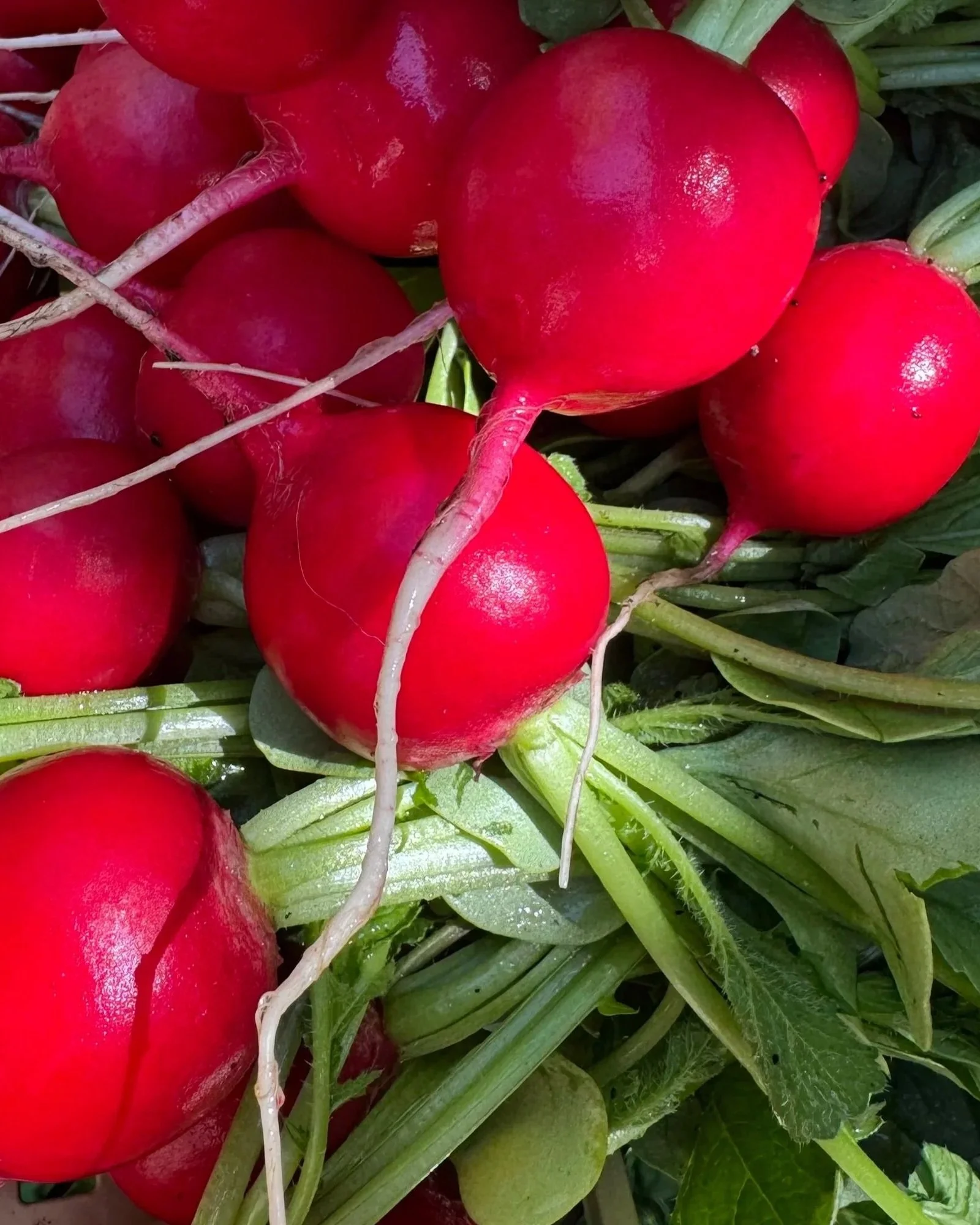
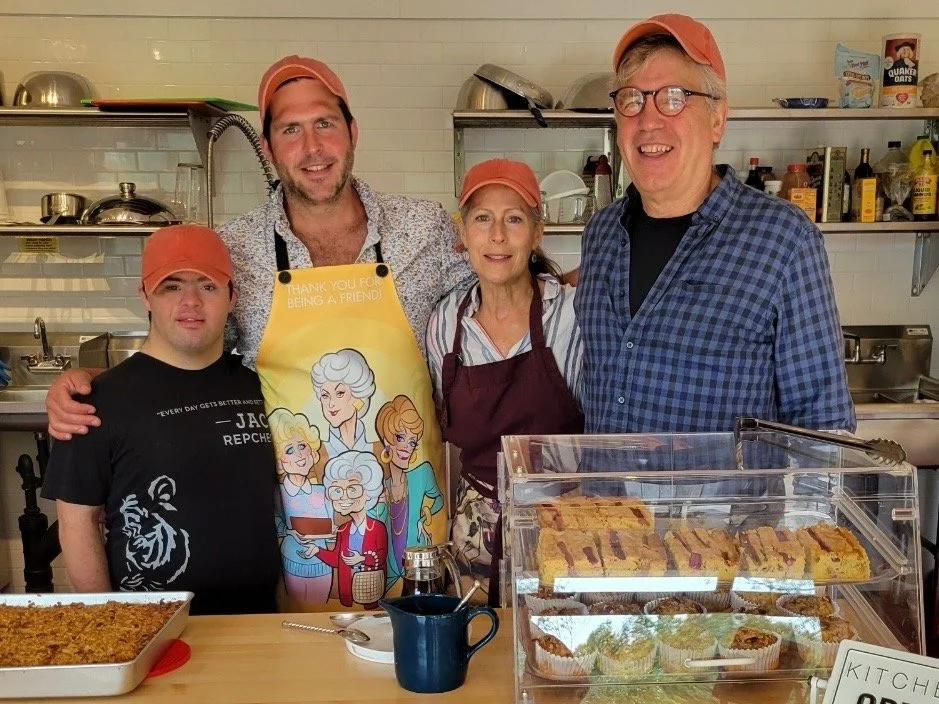
We are one month into year five, Peter and Julian are now running things. The post and beam roof over the dining deck, the stone walkway, the new patio outside the performance barn, two resided barns, new gardens, and the design changes in the restaurant instituted by the new regime, have all contributed to a major evolutionary step from the folksy early days of hand painted signs and no shelter from the rain. What remains constant, beyond the chickens and fields delivering the fresh ingredients, is a sense of place around which a community is growing.
With our new regular Friday night dinners (reservations available o
n Resy) where you can come and share a bottle of wine over a meal with friends and family, I am struck by the warmth generated by people who are relaxing and happy–walking the property with a glass of wine in hand as the sun sets. With so much mean-spiritedness filling our news feed and seemingly knocking the planet’s orbit off kilter, it is restorative watching young families meeting the baby goats, or starting conversations with the people at the next table. I am enjoying welcoming new friends and old, more sure than ever that the good will generated within the TBF community is a force for good.
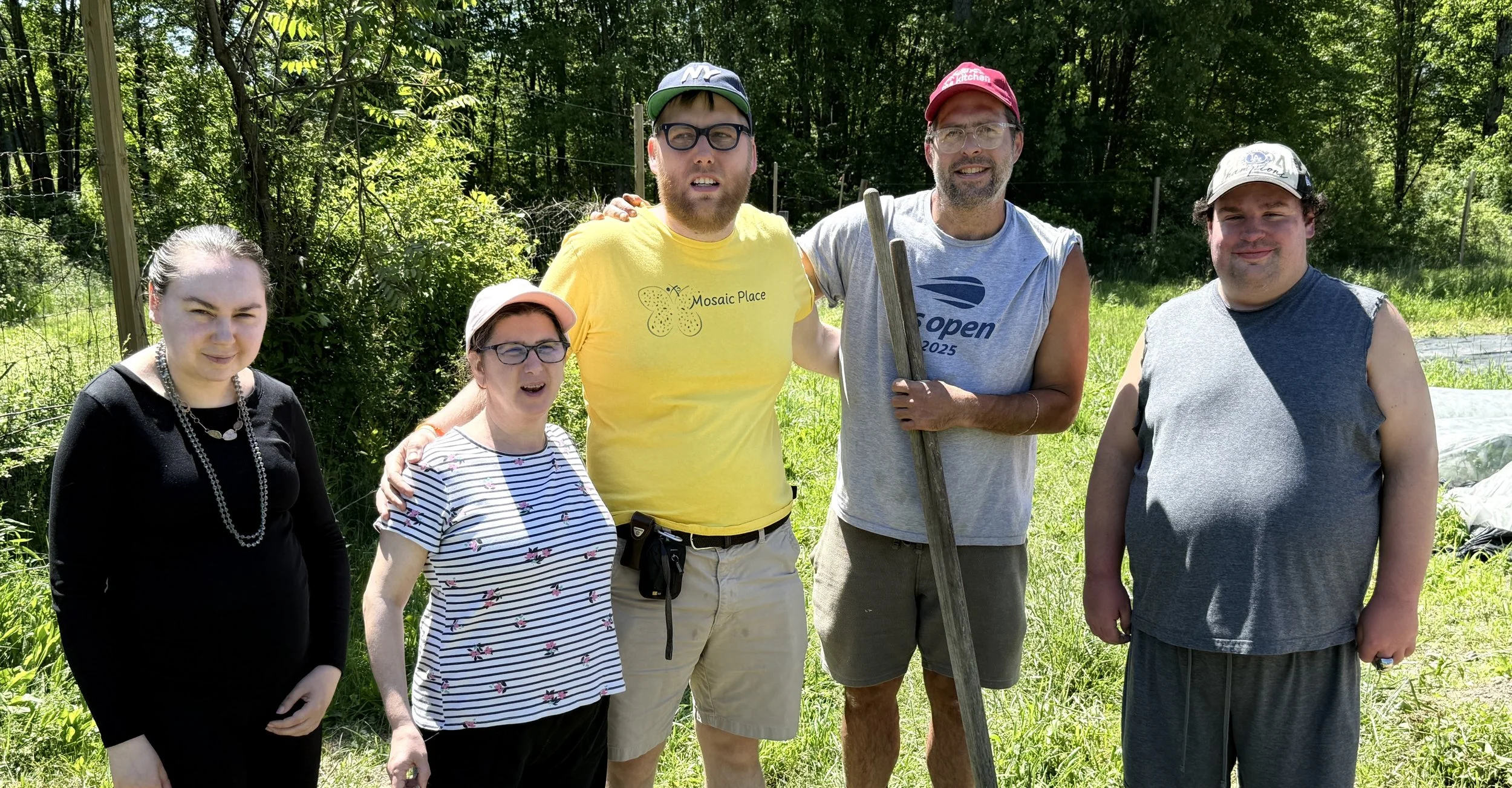
We held our first community day on May 23rd. The folks who signed up for the breath work and yoga classes in the morning met up with the Lunch and Lit crew for a community lunch. After sharing lunch (and contact info) with new friends, the book crew headed off to discuss our book of the month. During book club introductions, several people spoke about how central Ten Barn Farm events have been in making new friendships after moving up from NYC. With summer here, our collaboration with Camphill Hudson has begun. Each Wednesday the community will spend the day at Ten Barn Farm, watch for news of their community lunches and volunteer opportunities.
Come by The Farm for dinner on Friday, brunch on Sunday or special events and see all the changes, meet the baby goats and chickens, and make new friends.
Upcoming Events
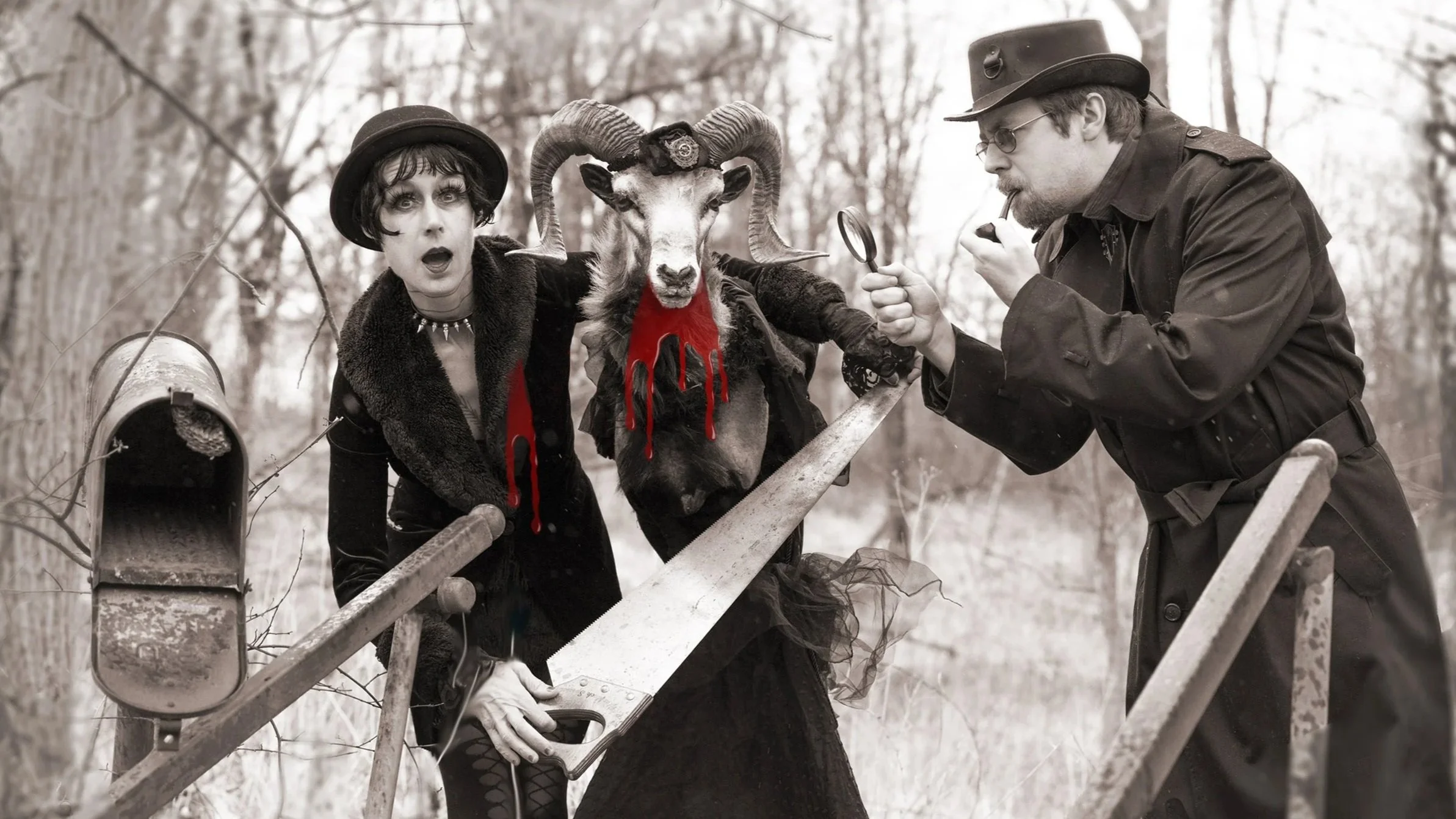
Murder Mystery Dinner with The Dust Bowl Faeries
This coming Saturday June 13th at 7pm!
There are still a few more tickets left for what is sure to be a night to remember!
Through haunting songs, immersive storytelling, and audience participation, the band will unravel the mysterious death of Hazel the Ram, set along side a 3 course Farm to Table Dinner!
Community Day - Saturday June 20th
Our second day of the season - Whether you’re Joining us for Yoga, Breathwork + Brunch at 10am, or Lunch + Lit at Noon, a delicious lunch will be served at 12pm for both groups to enjoy together! (Our next community day will be July 18th and we’ll be sharing additional details)
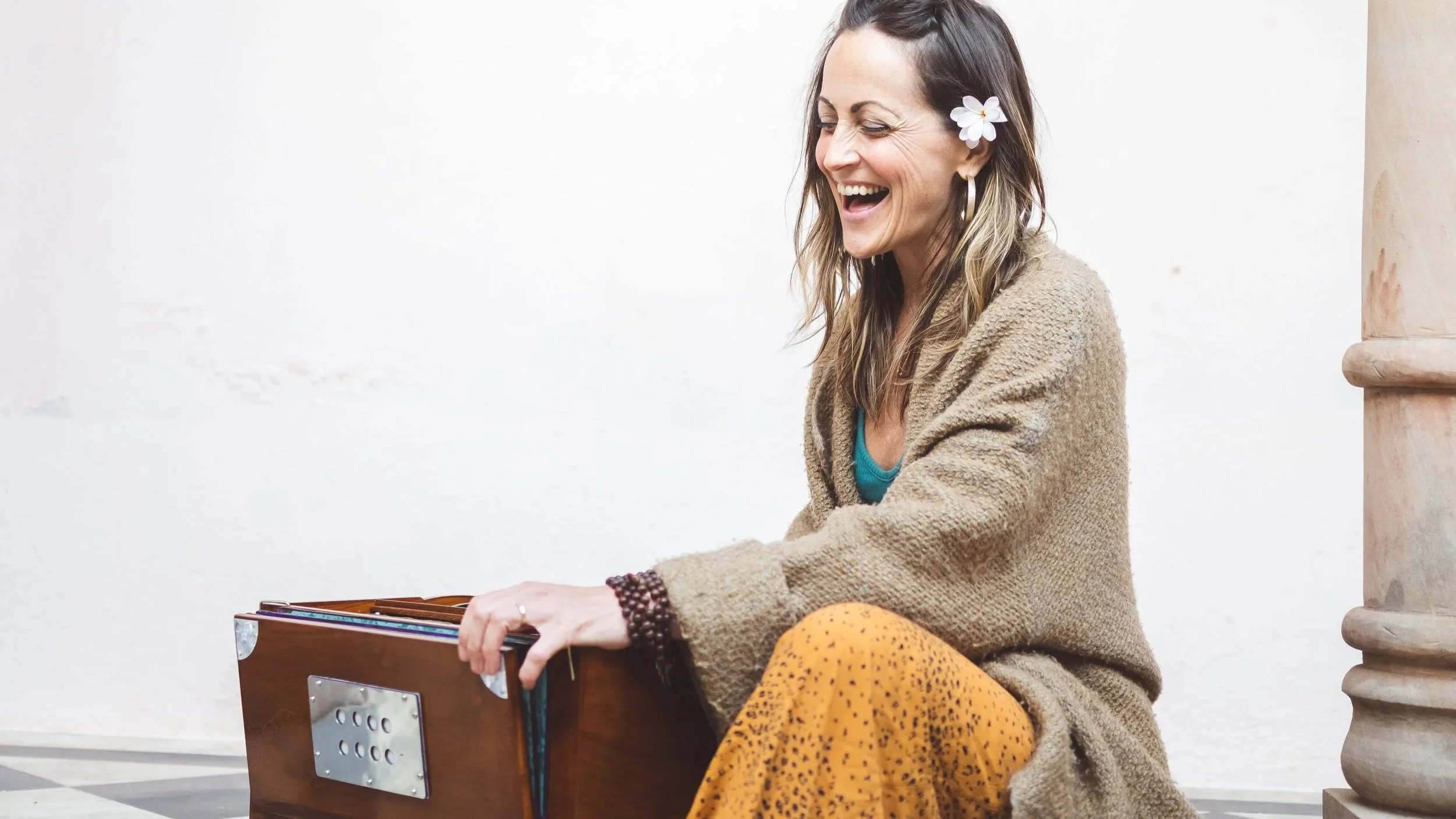
Yoga, Breathwork + Brunch
Saturday June 20th at 10am
Join us for a morning of awakening and ease at Ten Barn Farm. We’ll begin with a 90-minute guided practice, starting with a Bhakti flow yoga session to gently open the body and heart, followed by a cleansing breathwork journey designed to release and reset.
From there, you’ll have time to rest, reflect, and simply be on the farm while enjoying a nourishing farm-to-table brunch featuring our free-range eggs and the seasonal bounty.
Lunch + Lit
Saturday June 20th at 12pm
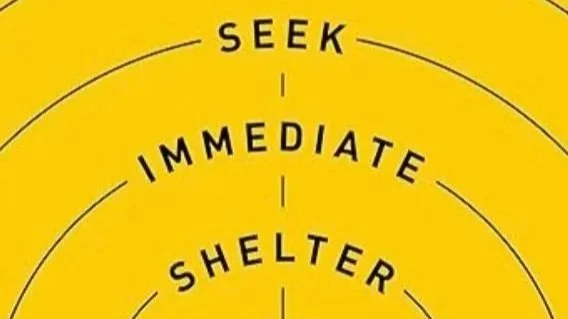
This month we are reading Vincent Yu’s debut novel set in western Massachusetts, Seek Immediate Shelter (published May 2026.) The author will join us for lunch, a reading, and the book discussion. It will be a stimulating afternoon.
Upstate Art Weekend + Art on The Farm
Coming in a few weeks, June 26th-28th.
For the third year in a row, we are participating in Upstate Art Weekend. Last year Vogue picked the Ten Barn Farm/Macedonia Institute show as a top stop for Upstate Art Weekend, and this year we’ve decided to put on our own show for the weekend.
Following this show we will be collaborating with curator Bill Arning to produce two more shows for the season, and are excited to announce those details soon!
Join us on The Farm for a meal, and enjoy some art while you;’re at it!
Cuban Jazz with the
Fancois Wiss Trio
Friday July 10th at 7:30pm
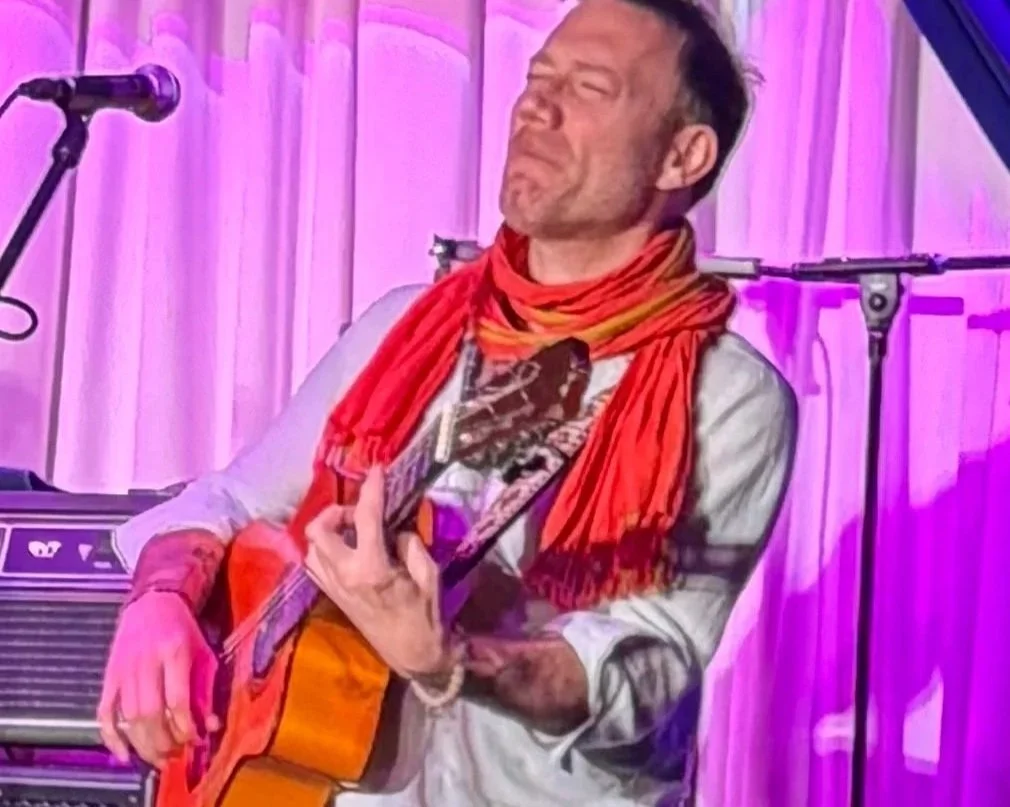
The Francois Wiss Trio, that I first saw at the Blue Note, is returning to Ten Barn Farm. Last year’s show was wonderful. Join us for dinner and stay for our own little Buena Vista Social Club evening. Tickets for the show are limited.
In August we’ll be inaugurating the Ten Barn Farm Speaker Series. Here is a preview of whats to come and some dates to get on your calendar…
August 15th, 2PM - Traveling Light
Distinguished professor and best selling author, Dr. Stephen Prothero, will offer his first public talk about his forthcoming book, Traveling Light: The Wandering Way of Jesus and Other Spiritual Pioneers. Laozi, the Buddha, and Jesus were all wanderers, and Stephen will talk about the central role the spiritual practice wandering played in their lives and in the religions that sprang up in their names. Stephen has been researching, writing, and teaching for two decades about wandering as a spiritual practice and a form of everyday resistance. He will also talk about the role wandering can play in today’s chaotic world.
August 22nd, 2PM - After Art, what is left but God?
Co-sponsored by The Shaker Museum.
What happens when artists answer a spiritual calling? And can becoming a minister itself be understood as an extension of an art practice?
Join curator Bill Arning for a conversation with Lucasen Brown and Dana Hoey, two widely exhibited contemporary artists who each made the unexpected decision to attend divinity school. At a time when the art world is often perceived as resolutely secular, their journeys raise provocative questions about faith, vocation, service, and the role of spiritual inquiry in contemporary culture.
Together they will discuss the personal motivations behind this shift and explore whether ministry, like art, can be a creative act—one that seeks transformation, builds community, and gives form to deeply held beliefs. The discussion promises fresh insights into the passions, commitments, and spiritual impulses that continue to animate artistic practice today.
Our Tenth Annual Farm-to-Table Dinner is the highlight of our season.
Saturday, September 12th at 6pm.
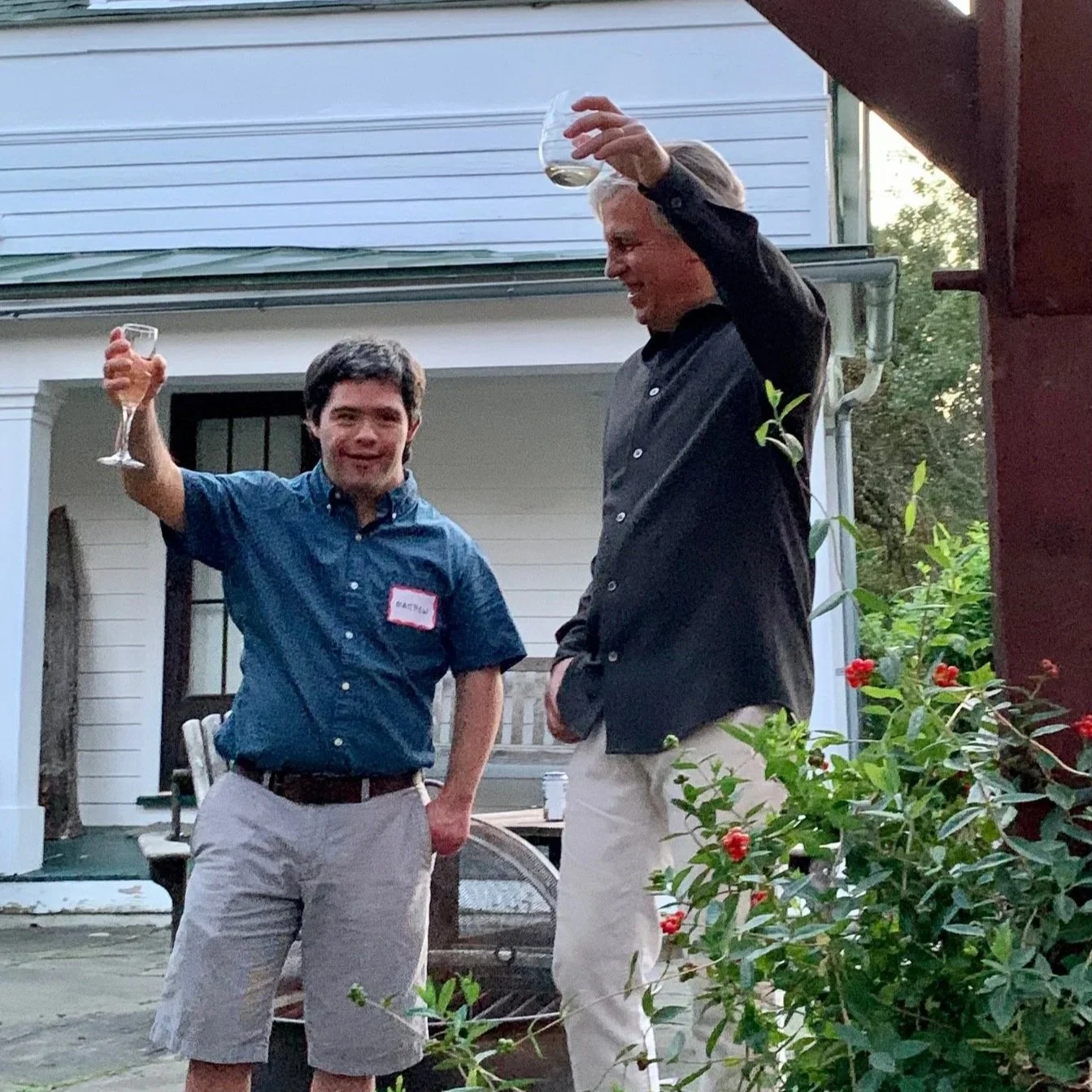
Our Tenth Annual Farm-to-Table Dinner is the highlight of our season. We open on the upper patio with fine wines, bubbly, and a huge appetizer spread where the guests meet and mingle with the sunsetting against the hillside. From there we all stroll down past the goats and the chickens to the restaurant where candlelit tables are set for a gourmet dinner. After dessert, everyone is invited to grab a coffee or final sip of wine and enjoy the evening-closing bonfire. Over the 3.5 hours you will meet interesting people and make new friends. Tickets are limited.
Exciting Updates for our 2026 Season!
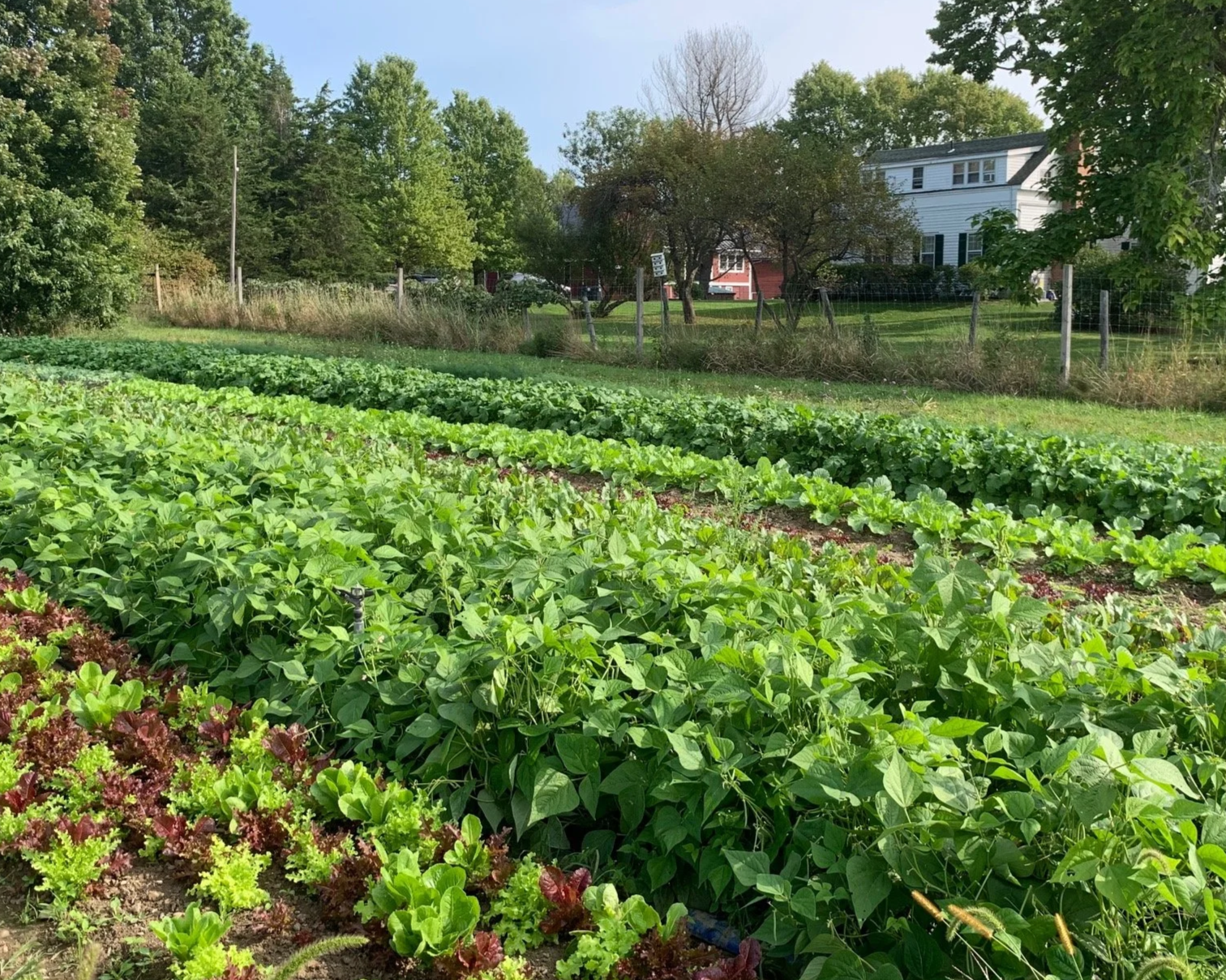
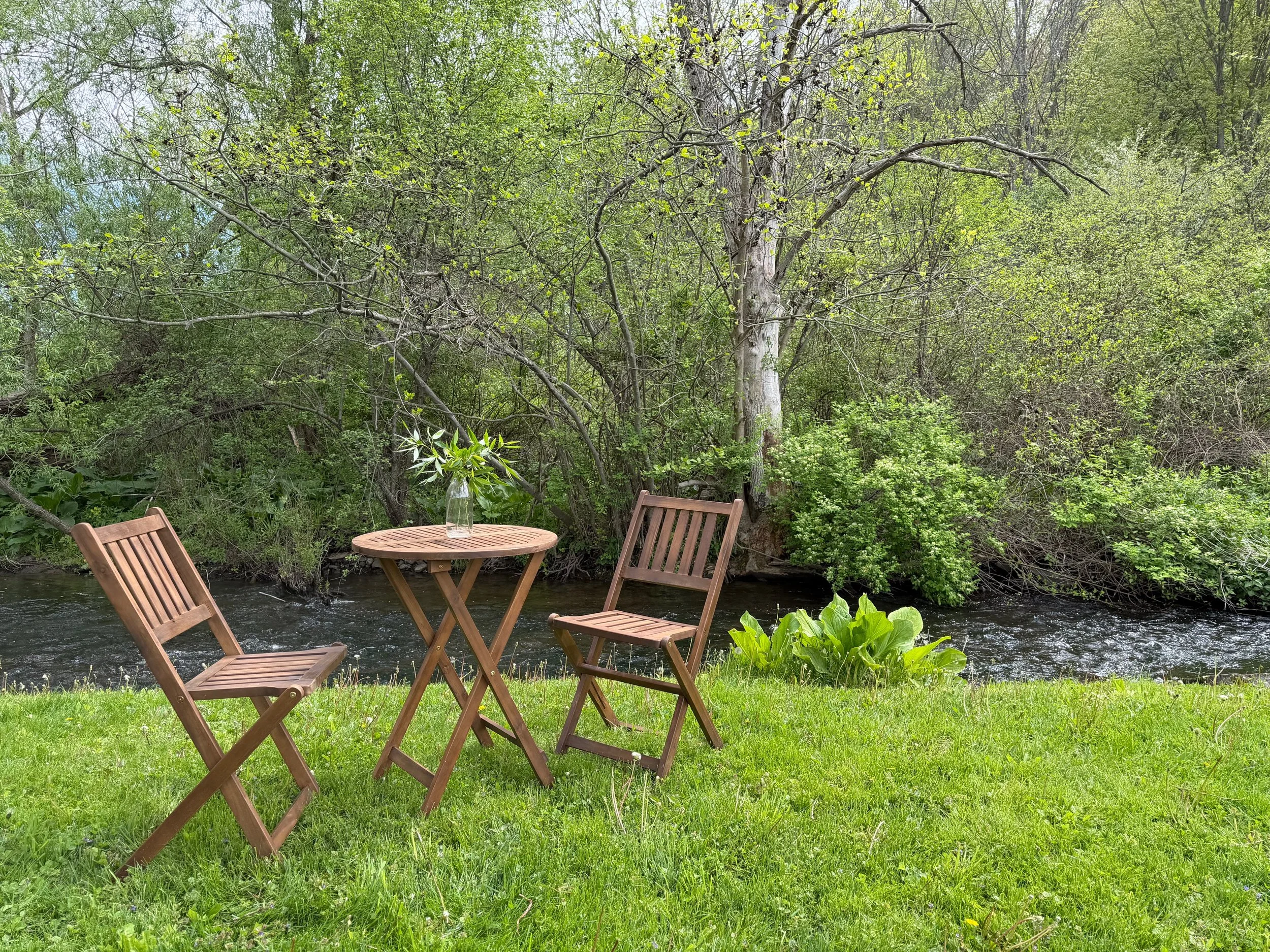
Throughout this long, dark, and fractious winter, I have been thinking about how we at Ten Barn Farm can do more to bring people together when so much in this country is pulling us apart. Over the past four years, we have built a community of people who come for meals with the freshest possible ingredients, for the music, theatre, book discussions or just conversation with neighbors. There is much goodwill in all of it, but the question I have been asking myself as I watched all the difficult news coming out of Minneapolis and other places is “can we be more intentional about offering people ways to connect, find common cause and discover shared values?”
EXCITING CHANGES…
With Peter and Julian taking over the day-to-day operations of The Kitchen, I am going to be focused on scheduling events and activities that further builds a community. We will likely create a not-for-profit arm of Ten Barn Farm which will hopefully offer a range of activities including: programming for people with developmental disabilities, discussion forums, and a diverse range of arts programming. There will also be volunteer opportunities for those looking to become more actively engaged with us around these programs. More on all of this in a future newsletter.
The big news is on April 1st the Ghent Town Board approved Peter and Julian’s revised plan for The Kitchen.
Friday nights: This year we will be open Friday nights for dinner, often followed by an event in the performance barn. Happily, we are building a cool roof over the deck which will make us less weather-dependent!
Saturdays: One or two Saturdays a month we will offer a range of community activities–the book club, breathwork or yoga classes, discussion forums, wine tastings or art classes. You’ll be able sign up for the activity which will include a delicious farm to table meal.
Also on Saturdays, we will be focusing on hosting private events. So think of us for your next dinner party, birthday, anniversary, graduation, shower, or a rehearsal dinners.
Sunday Brunch: From day one Sunday brunch has always been our most popular and defining meal, and that will continue this season serving brunch from 9-2 every Sunday starting with Mother’s Day.
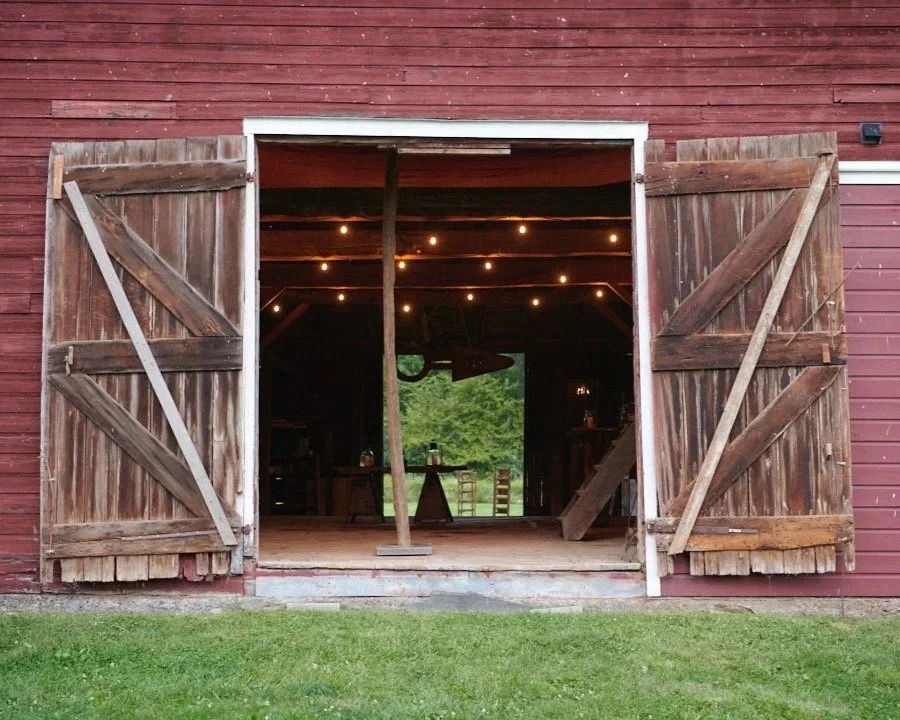

October 2025
As Julie and I prepare to head into the sunset and turn operations over to Peter, I wanted to get out a final 2025 newsletter telling the Ten Barn Farm origin story and reflecting briefly on what we’ve learned.
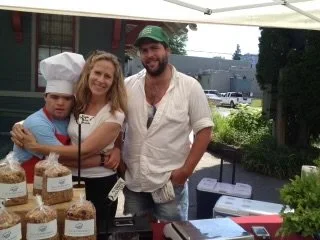
Vintage photo: Our first Farmers’ Market (June 2014)
As Julie and I prepare to head into the sunset and turn operations over to Peter, I wanted to get out a final 2025 newsletter telling the Ten Barn Farm origin story and reflecting briefly on what we’ve learned.
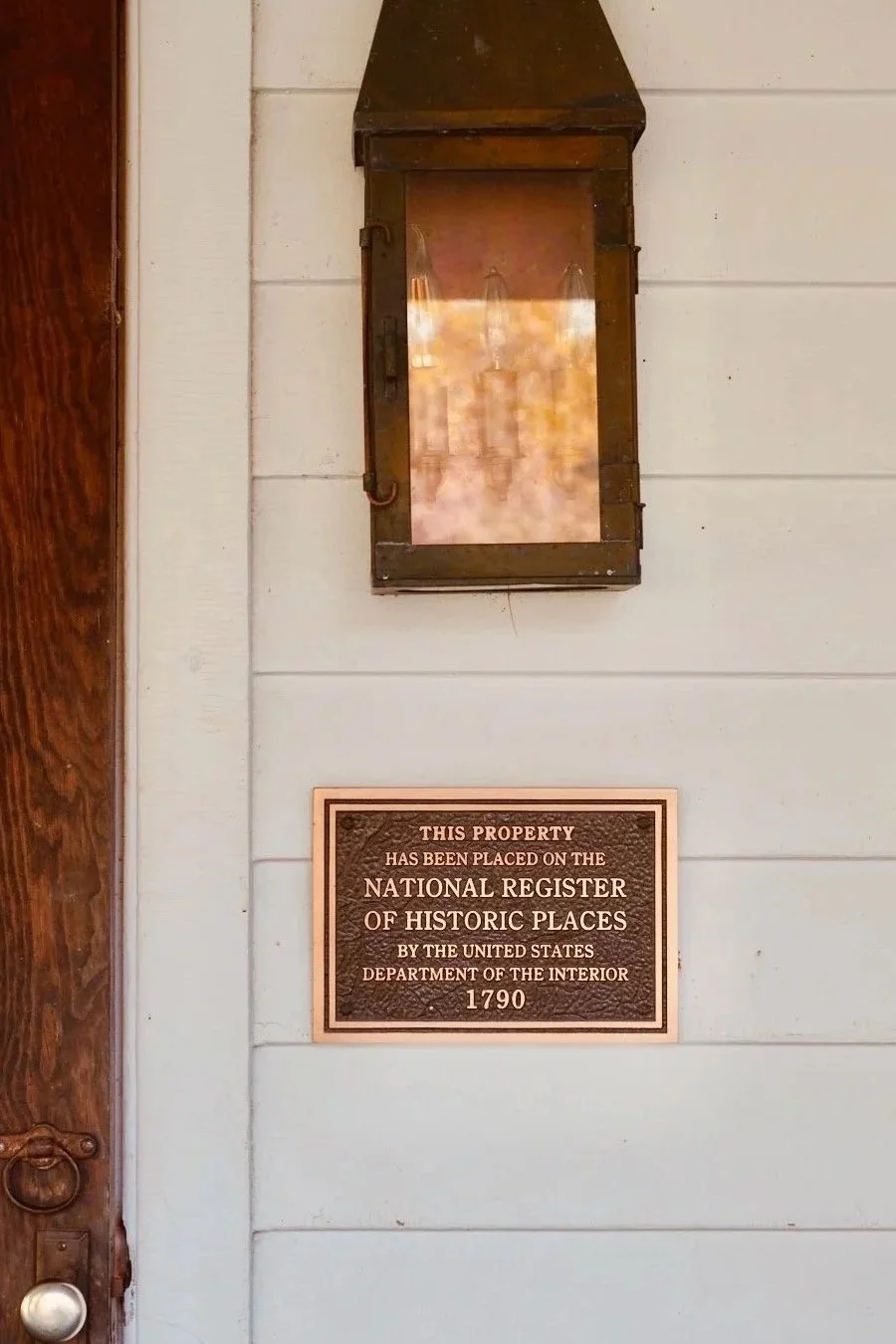
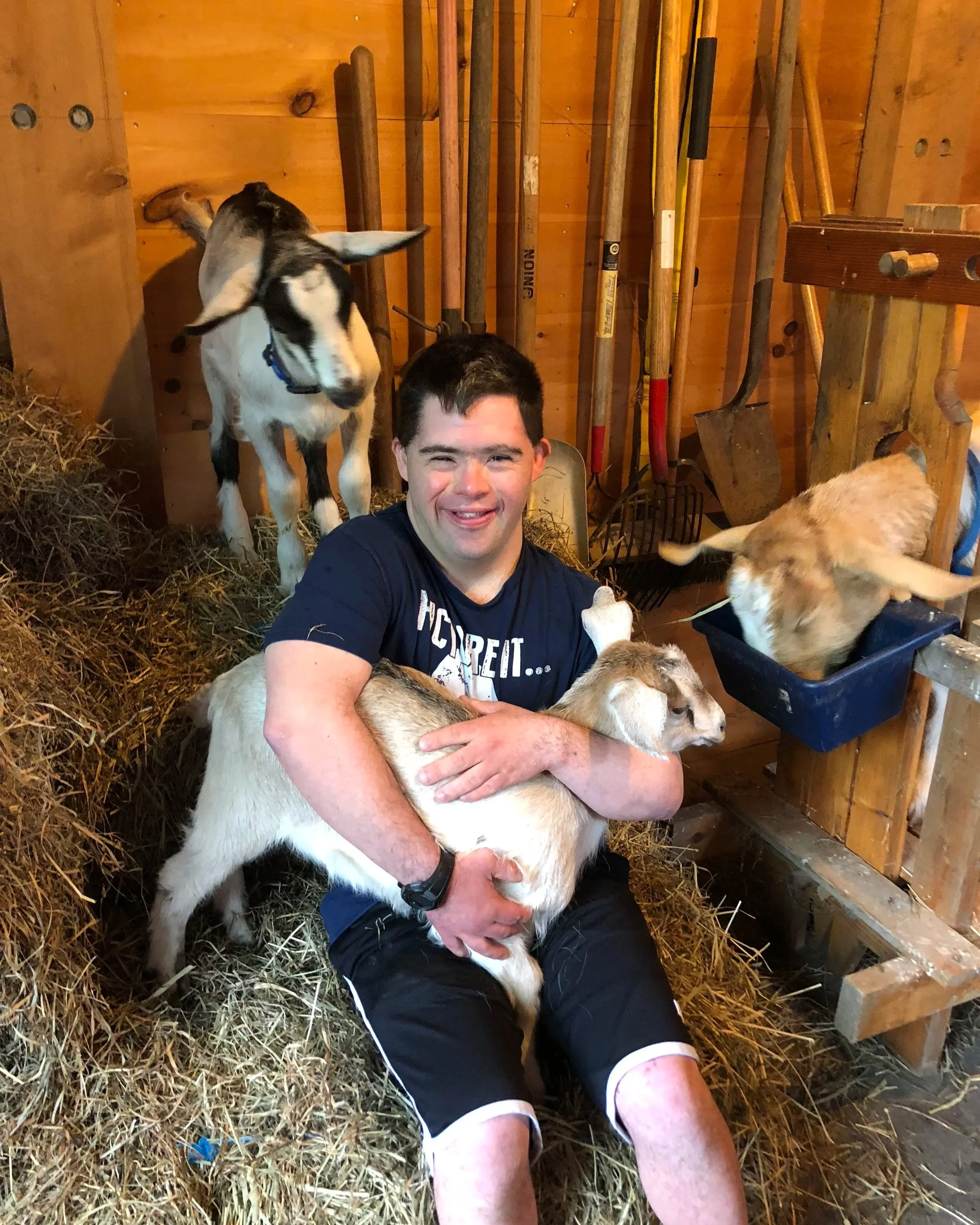
We bought the farm (circa 1790) in 2011. Our primary motivation was to live close to Matthew, our youngest son, who has Down Syndrome, and who had recently enrolled in Camphill Triform just outside of Hudson. His move out of the house left our home quiet and made my daily commute into NYC from Princeton, where we had lived happily for 30 years, seem intolerable now that Matthew was not benefitting from the Princeton schools.
When we began our real estate search we hoped to buy a farm. Peter, our middle son, had spent the previous three years farming in California and had become serious enough about sustainable agriculture that he completed a farming program at UC-Santa Cruz.
When Julie first saw the property and the gorgeous 225 year-old farmhouse, she was drawn to both the beauty and the authenticity of the farm. These buildings (including the stone smokehouse and the three-seater outhouse) had lived together for so long that there was a harmony to the farm that drew us to it, still it took us 9 months to wrap our minds around how much we would be biting off—so many old barns! Finally in February 2011 we did make the leap. We felt certain that we would find a path forward, but the path was not at all clear when we moved in. What was clear is the fields, which had been so generous to many generations, would welcome us, and if you put chickens in a barn built for chickens they know where to roost and where to lay their eggs.
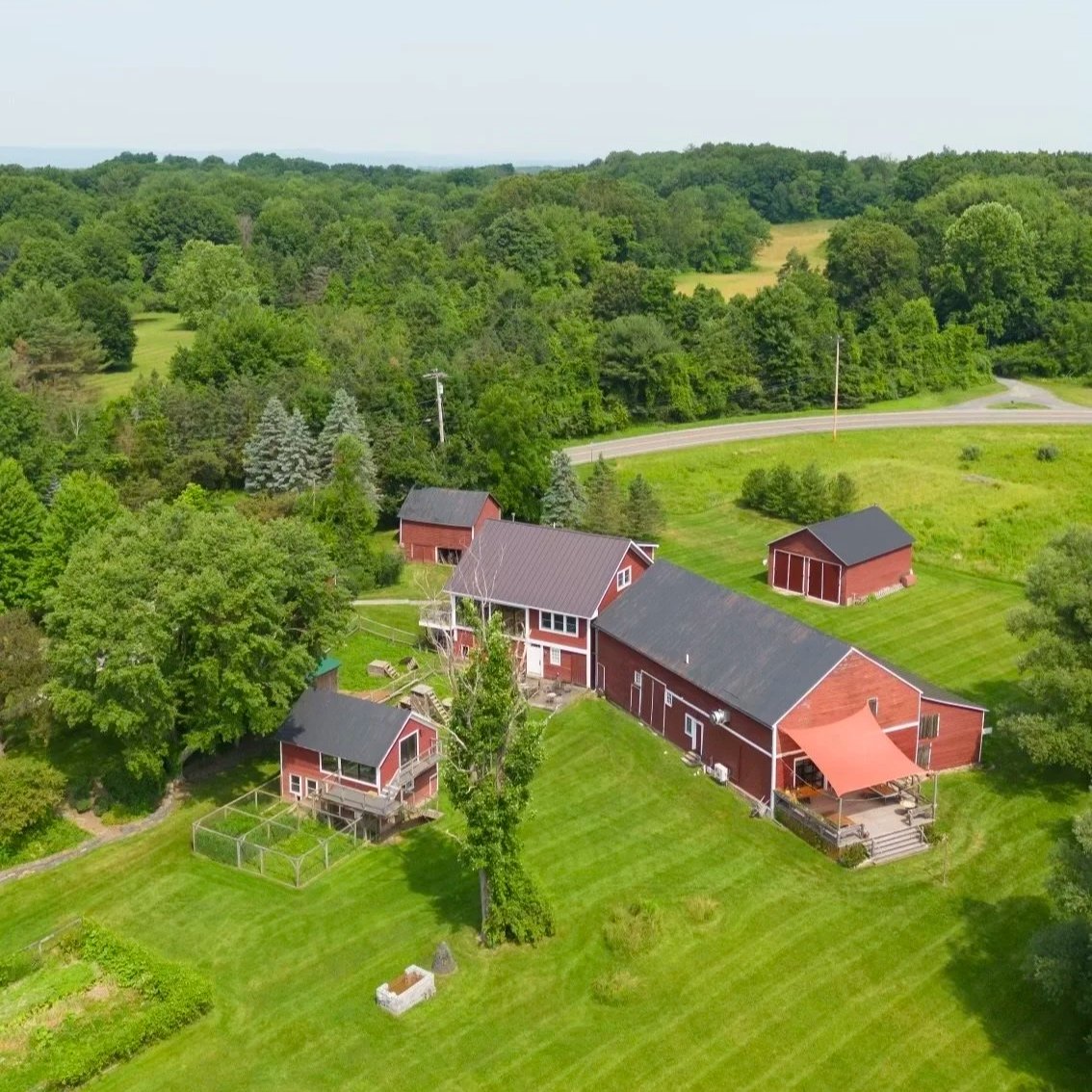
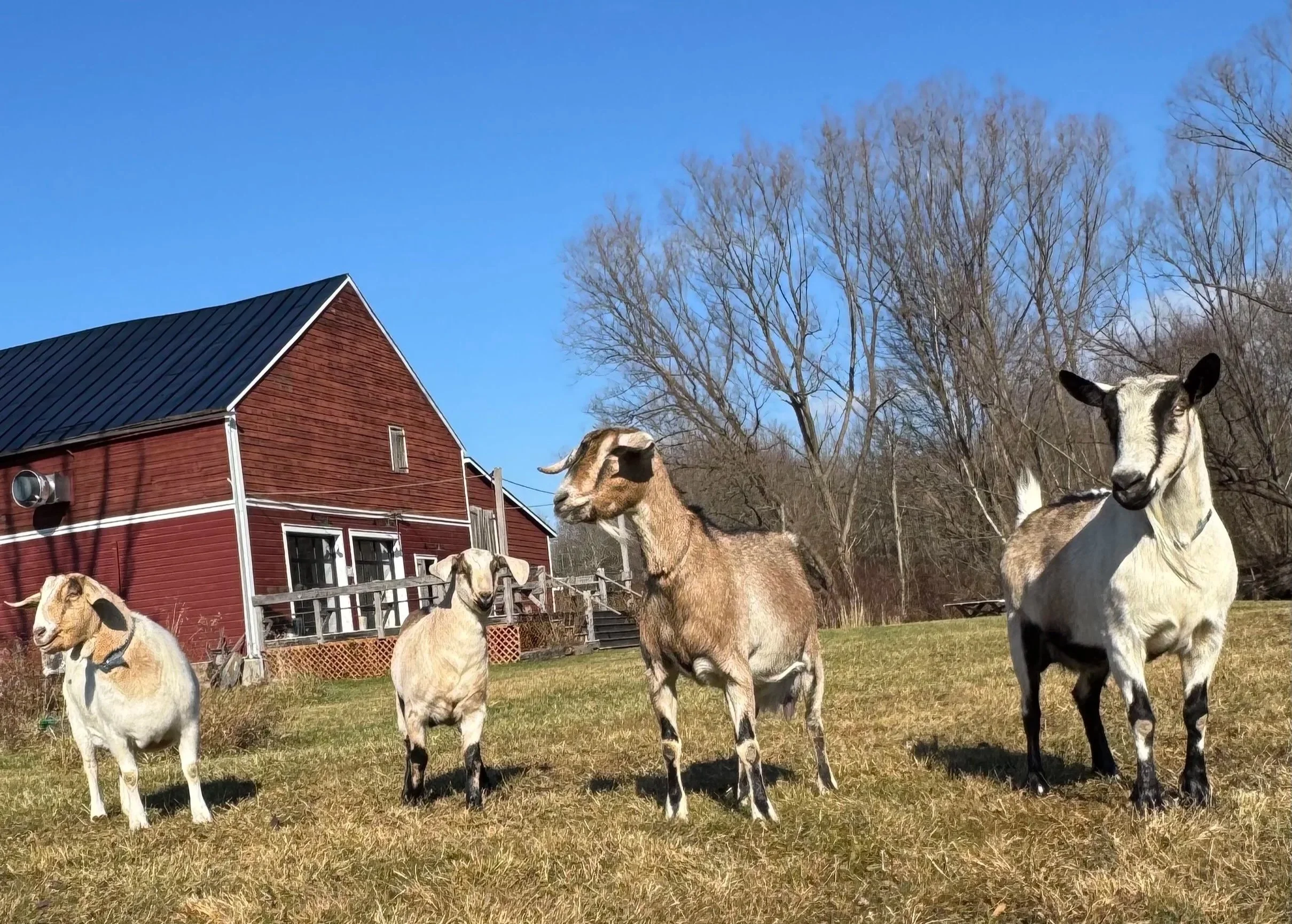
That first year we acquired two goats, Claire and Bernie, which became a focal point for Julie’s growing interest in cheese-making, 15 chickens and planted a big vegetable garden. The first big piece of our future fell into place when Peter decided to come back from California to farm the land, the early years selling at farmers’ markets, then to restaurants, and finally forming a Ten Barn Farm CSA–all the while nurturing the health of the fields.
During that period of agriculture evolution, we literally jacked up three barns to rebuild foundations, fixed, replaced, or painted eight metal roofs, converted the hay barn into our living space, turned the second floor of the chicken barn into an office, built two patios, enlarged the goat playground, reclaimed the creek banks creating new paths, and built the 10th barn to house a modern tractor.
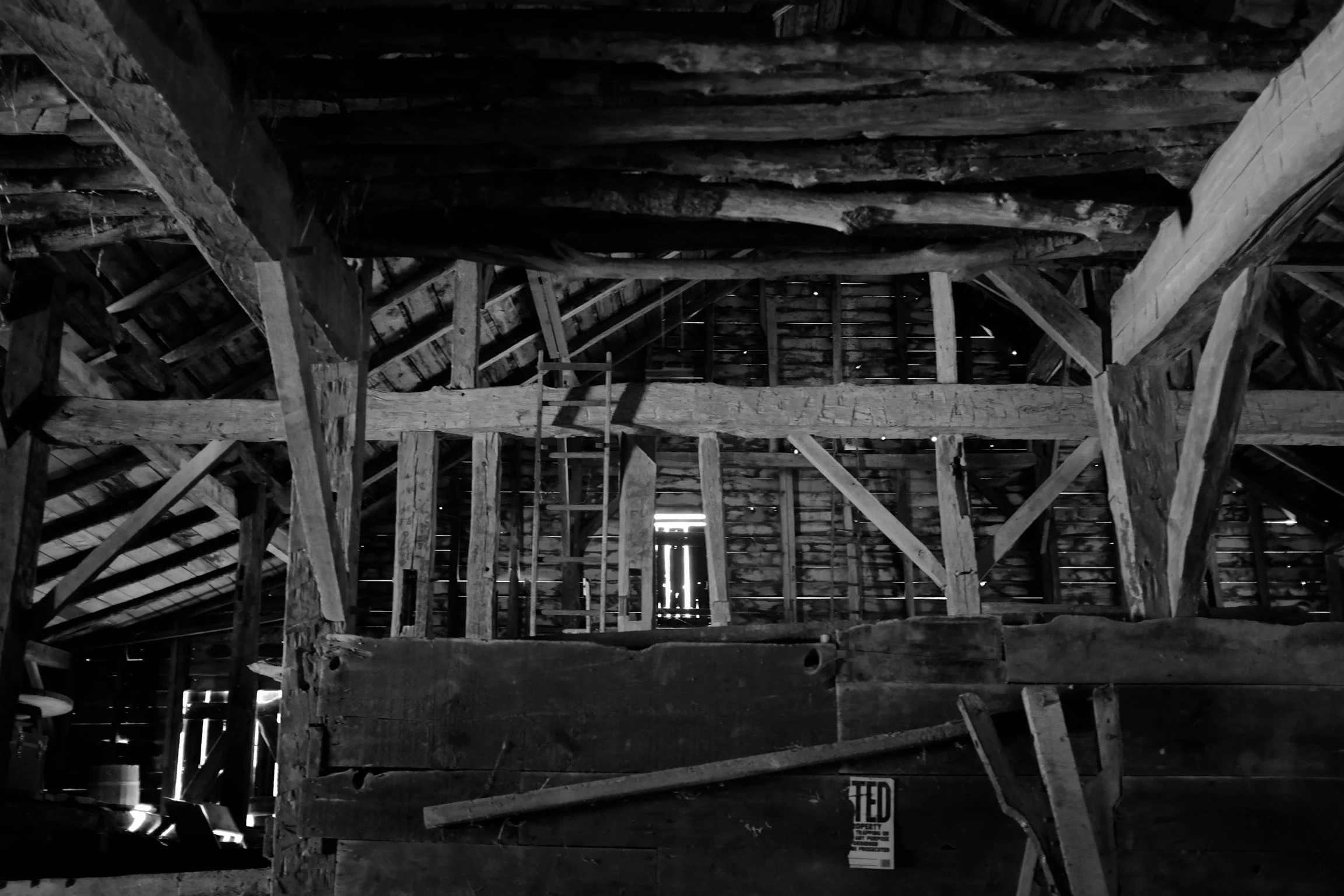
It was during this period that we stopped thinking of the all barns as maintenance burdens and started to see them as amazing, hand-hewn spaces for which we needed to find new purposes.
Beyond all the barns, we had hundreds and hundreds of old beams, boards, and barn doors with which to work–farmers never threw out anything that had any potential utility leaving us so many beautiful old things piled up waiting for a new opportunity to be useful and appreciated again.
I found the whole process more and more exciting, and while I had lots of ideas and energy, my skillset was quite limited. So many craftspeople contributed to the rebirth of the farm, but none more so than Bradley Kurtz who for the past 14 years has played a central role in both rebuilding and maintaining all these old spaces as well as finding the other people we needed to create today’s Ten Barn Farm. Before the cafe opened, while I was still working in NYC for the independent and employee-owned book publisher W.W. Norton (a place I loved working for 40 years), I would come up on the weekend and Brad would have saved the low-skill tasks for me, so that I could feel useful. I loved the manual labor and would get back on the train to the city most Monday mornings, physically tired from the hammering and sawing, but so satisfied with the ongoing fruits of our labor. The evolution of the farm was a lot of work, but it also made us happy every step of the way.
Nine years into our life on the farm, we still had the biggest and most beautiful barn on the property available for reinvention, and with my retirement date on the horizon, Julie and I started talking about her dream of opening a cafe.
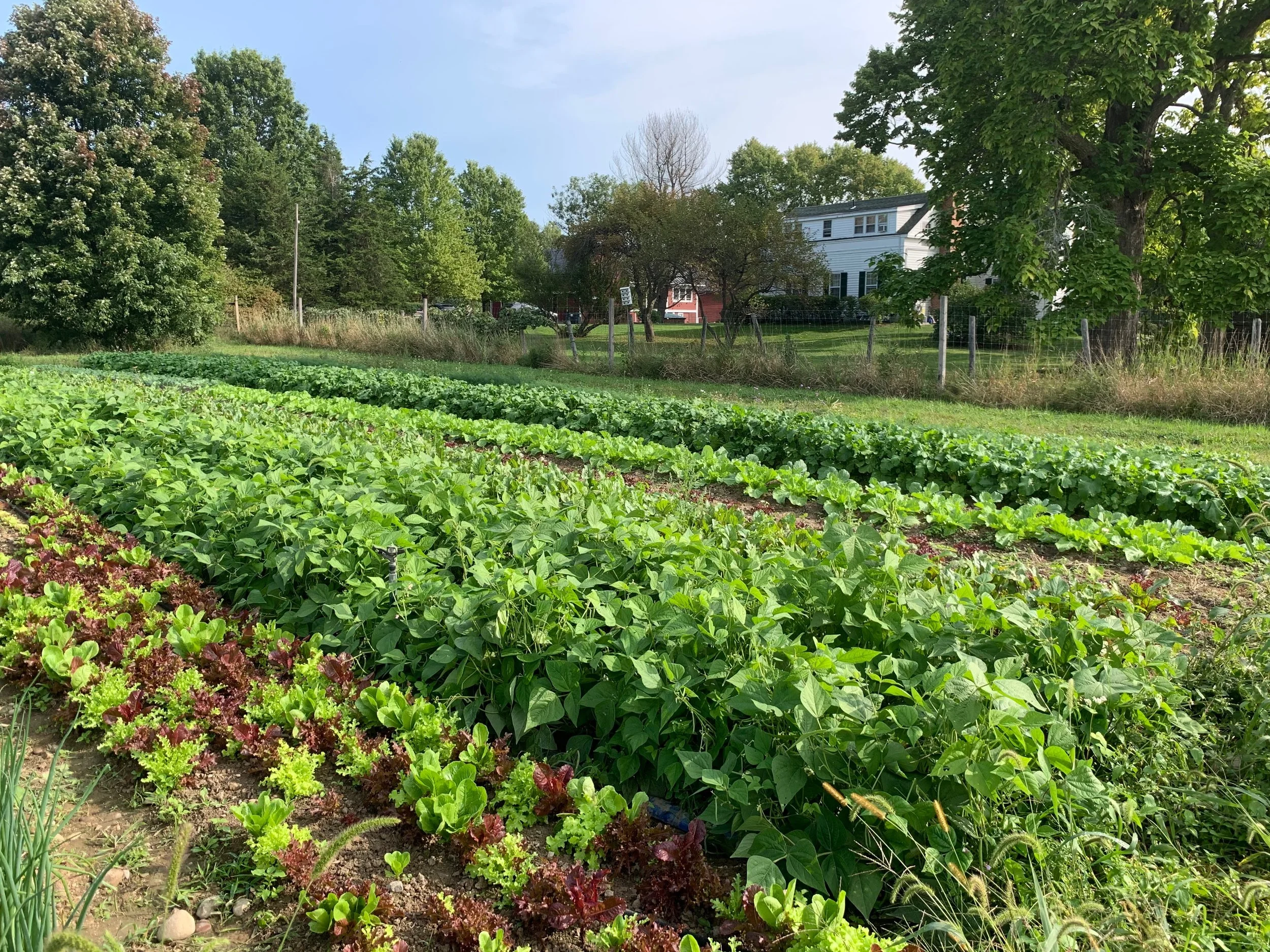
Peter had been farming for seven years at that point and was ready for a new focus to his crop planning, and the idea of growing vegetables that he and his mom could turn into zucchini pancakes or shakshuka for friends and neighbors was very appealing.
And Matthew, who was now living in Hudson, really wanted his first job and his first paycheck.
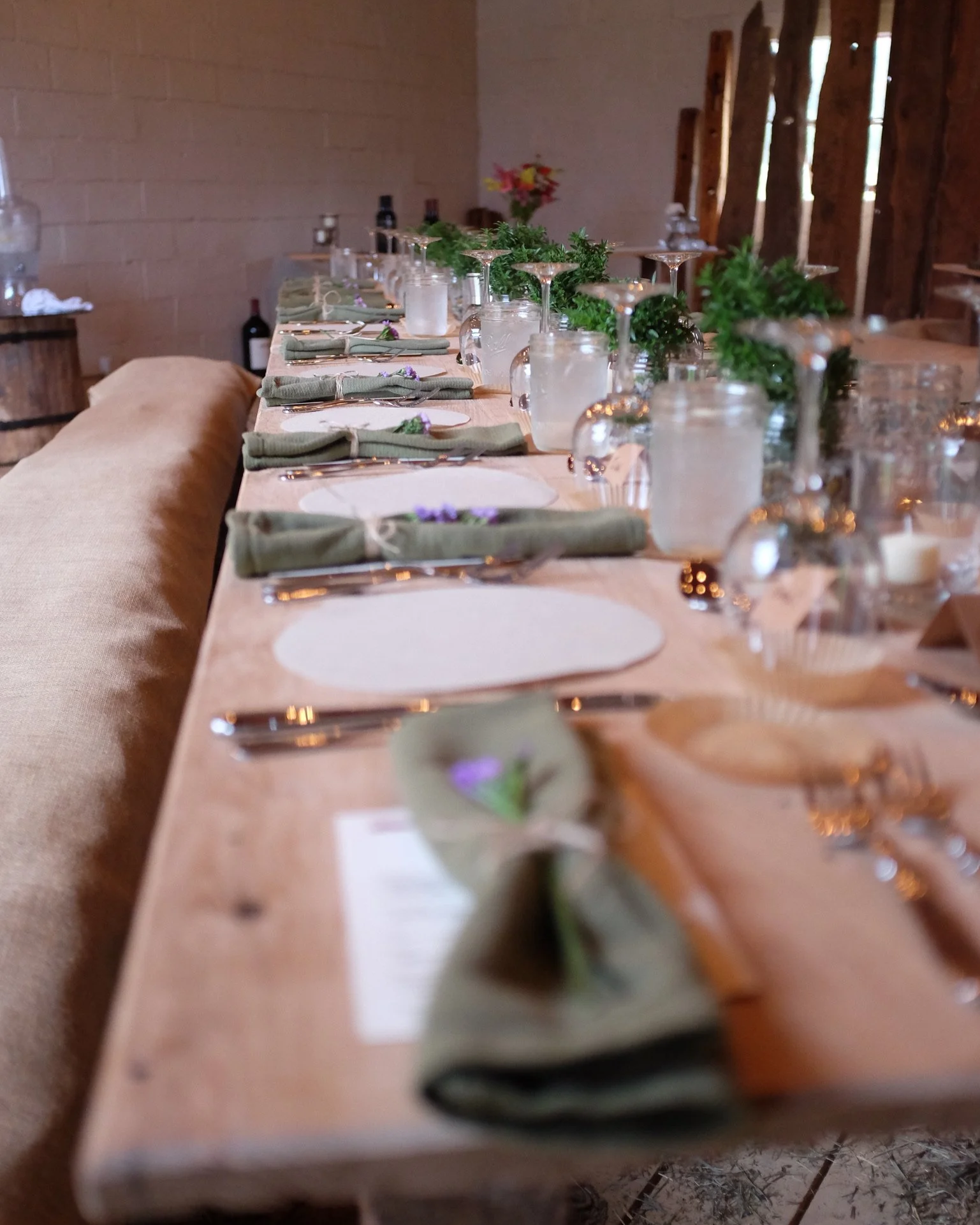
Our first farm-to-table dinner
By then we held five big farm-to-table dinners and three smaller, rare wine dinners with our eldest son, Andrew, which had all gone well.
Led by Julie, we were all ready for the next step, and we identified about a quarter of the big barn for The Kitchen at Ten Barn Farm. The plans were drawn up, Brad built the deck, kitchen equipment orders were being contemplated when two unexpected things happened–I got a really interesting year-long research fellowship in California and COVID turned the world upside down.
Julie agreed to hold down the fort (and also care for my chickens) while I was in Palo Alto with the understanding that after that year of privilege, I would come back in June of 2021 ready to roll up my sleeves as her, and Peter’s, maintenance man and front of house guy. She oversaw the building of the Kitchen blending the old with the new. It turned out great, but, like so many construction projects, it took longer than expected. So we set our sights on spring 2022 for the launch.
With construction done, but six months until opening, we had time to think about what we hoped The Kitchen might become. We did not know what to expect, but there were definitely guiding ideas that we hoped would be central to the endeavor: we wanted to serve really fresh food grown organically in our healthy soil that traveled only a few yards to the plate; we were preserving the land, returning the farm to its working roots and, in doing so, we were connecting with all those farmers who had come before; we wanted to share the beautiful farm as well as the idea of small scale family farming with the community; we wanted to give Matthew meaningful work and be an example of the benefits of inclusive employment; and we hoped to become a gathering place where we got to know our customers (and they got to know each other) creating community in a lonely world.
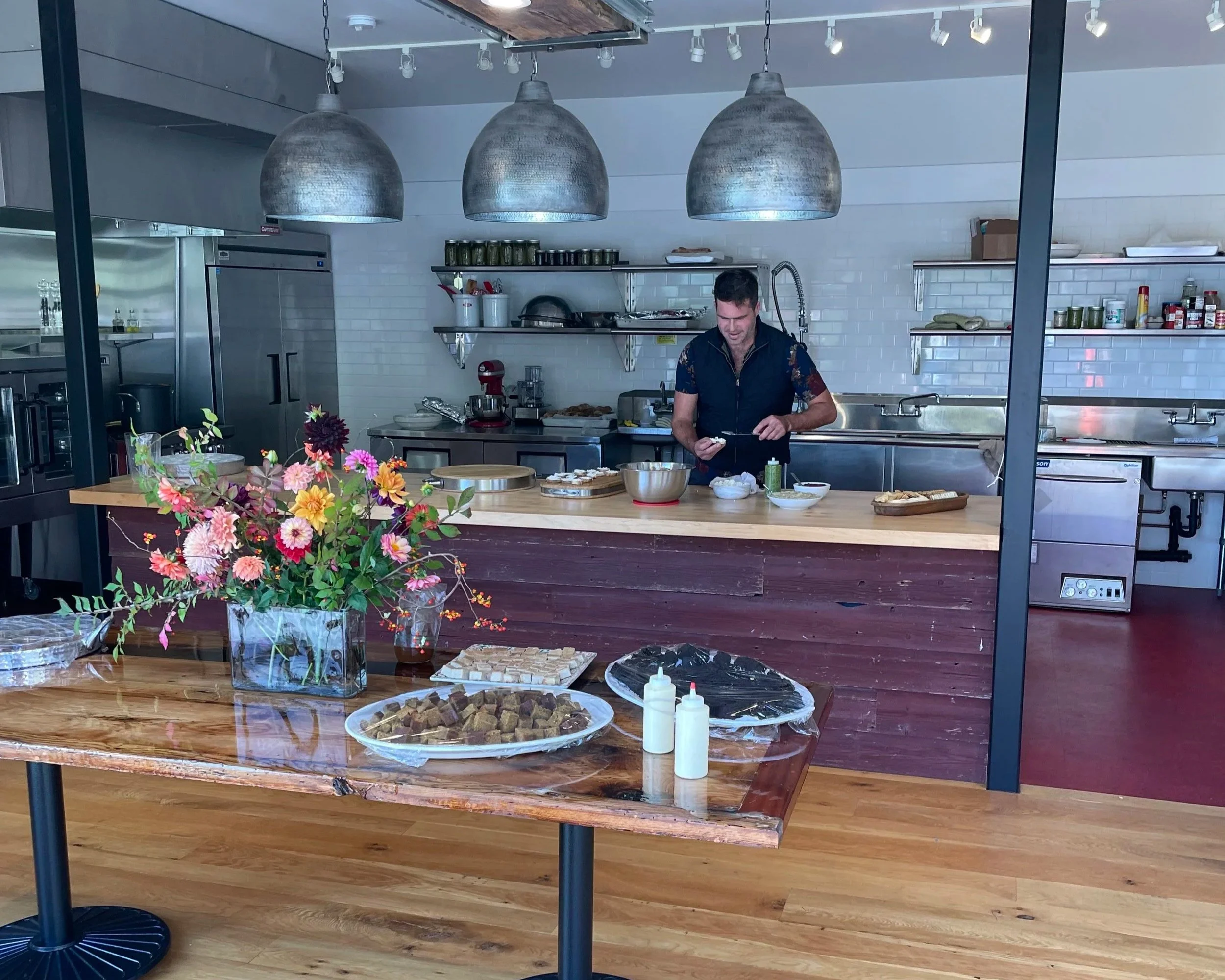

We opened Memorial Day weekend 2022 with hand-painted signs out front and a few Instagram posts. The plan was to be open Friday-Sunday for brunch.
Folks started showing up that first weekend in small numbers, and we became immediately hopeful because so many seemed genuinely surprised when they walked to the back of the farm, turned the corner, saw the cafe and said, “Wow, I had no idea this was back here.” And after enjoying their parmesan dressed eggs on sour dough toast and cream cheese scrambled eggs on Japanese milk bread, those first patrons helped us spread the word. Another crucial piece of our first season was that the weather was gorgeous almost every weekend (very different from recent years), so we began to have regulars and the TBF community started to form. Fridays were pretty dead with so many of your patrons only here on the weekend, but Julie and Peter treated Friday as a prep day for the weekend with the occasional customer coming in. Soon Saturdays had a steady flow of customers, and some Sundays we were genuinely busy. And when the tomatoes, eggplants, shisito peppers, and the rest of that first summer’s bounty started showing up on the menu, people started checking the menu on instagram before coming in, and we started to feel pretty sure the enterprise was going to work.
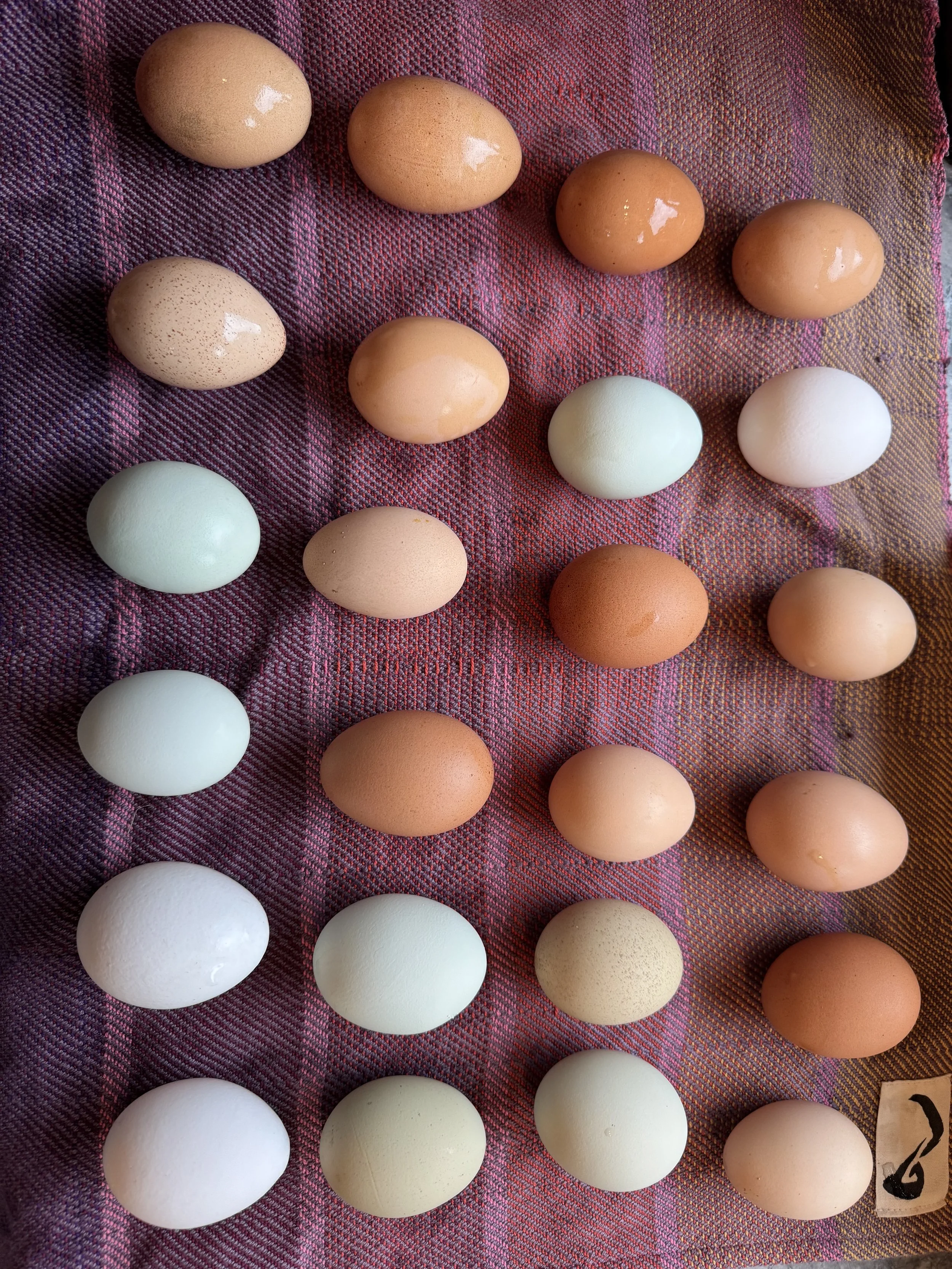
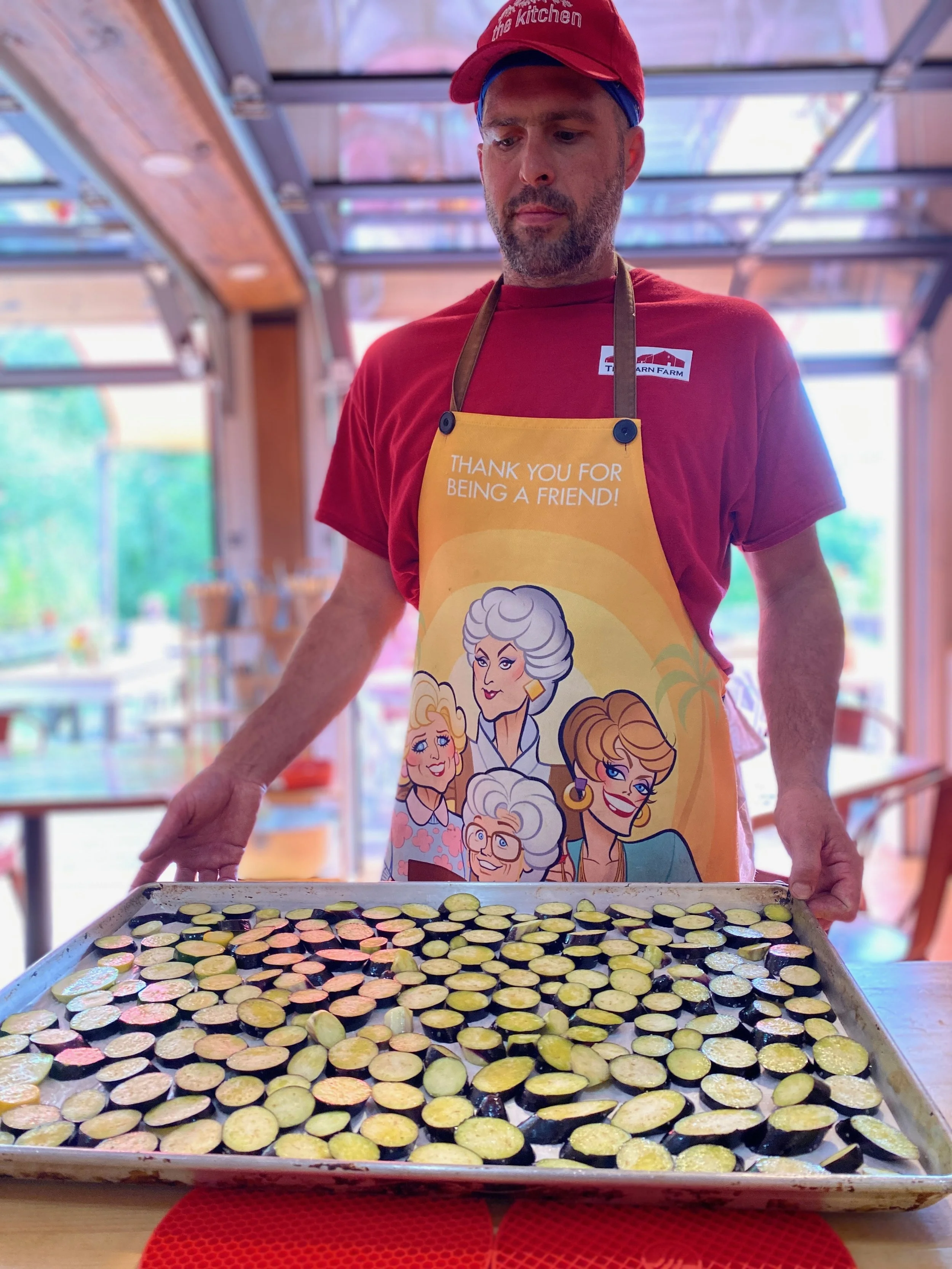
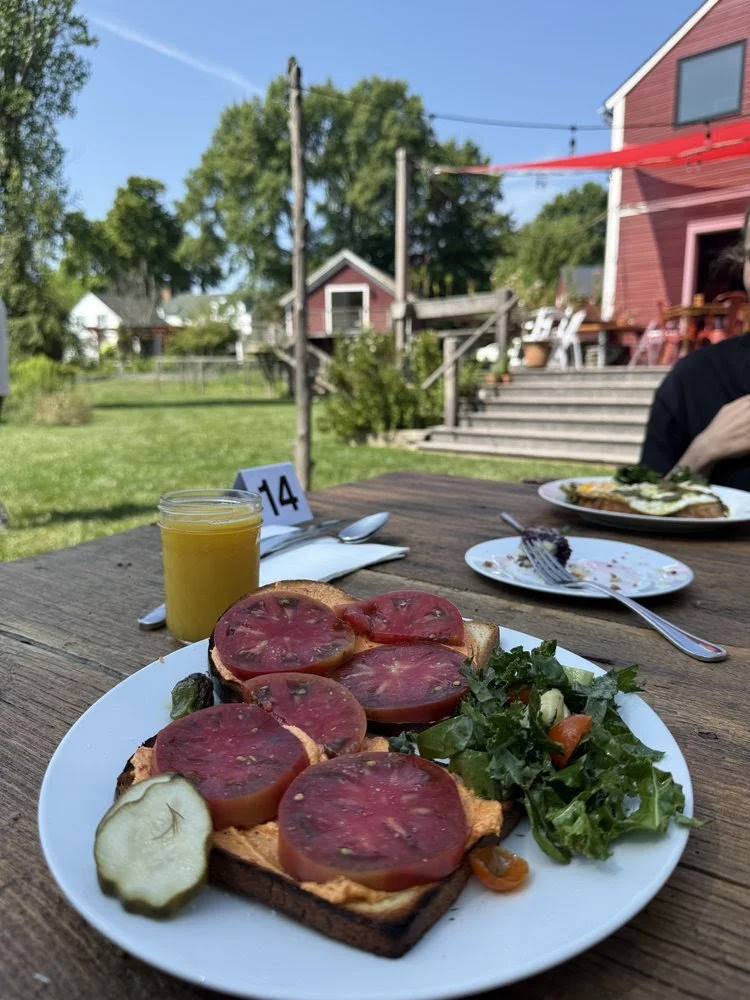
That first year it was just the three of us which was challenging–farming and harvesting as well as baking and prepping, not to mention keeping the grounds beautiful and running the cafe–but that year there was a lot of adrenalin pumping through us as a growing number of people seemed to genuinely appreciate what we were trying to do. The second year we added an employee, held a coffeehouse, cooking class and a few more dinners exploring new possibilities while continuing to serve brunch Friday-Sunday. And our customer base grew in a way that we found quite manageable and friendships were forming.
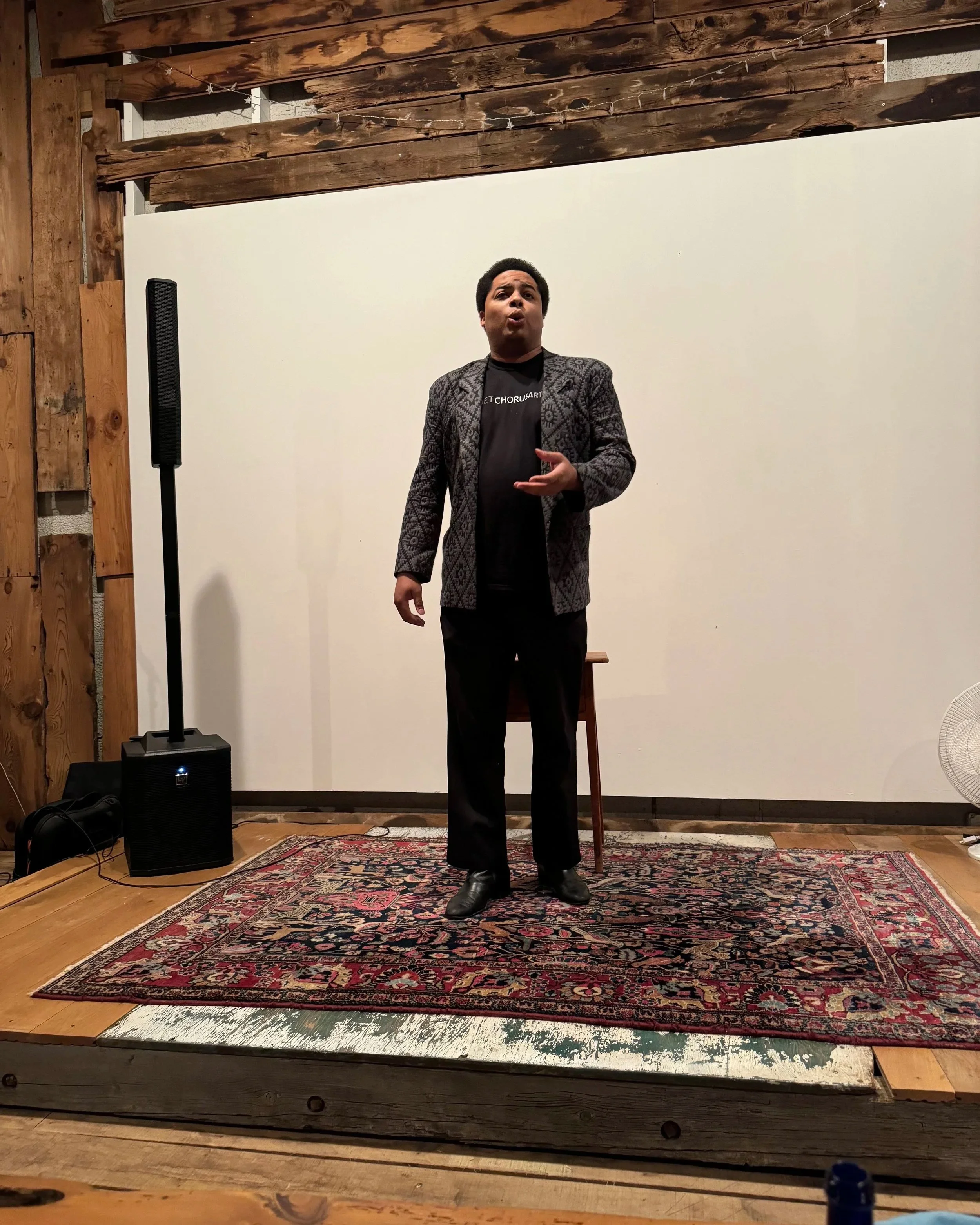
Opera in the barn
Anticipating more of an events program, I went through the tricky process of getting a seasonal New York State beer, wine and cider license the winter between our second and third years. This license led us to drop the quiet Friday morning hours and instead be open Friday evenings for tapas, wine and beer. I was convinced this was going to be a hit–the sun setting against the hillside, the cooling evening air, fresh food and good wine– but I was wrong.
People showed up in small numbers, which led to warm conversations and we enjoyed getting to know our Friday regulars, but the idea was not catching on sufficiently. That third year we did more evening events adding dinners as well as plays, operas and storytelling evenings in the performance barn. We also had our first art show.
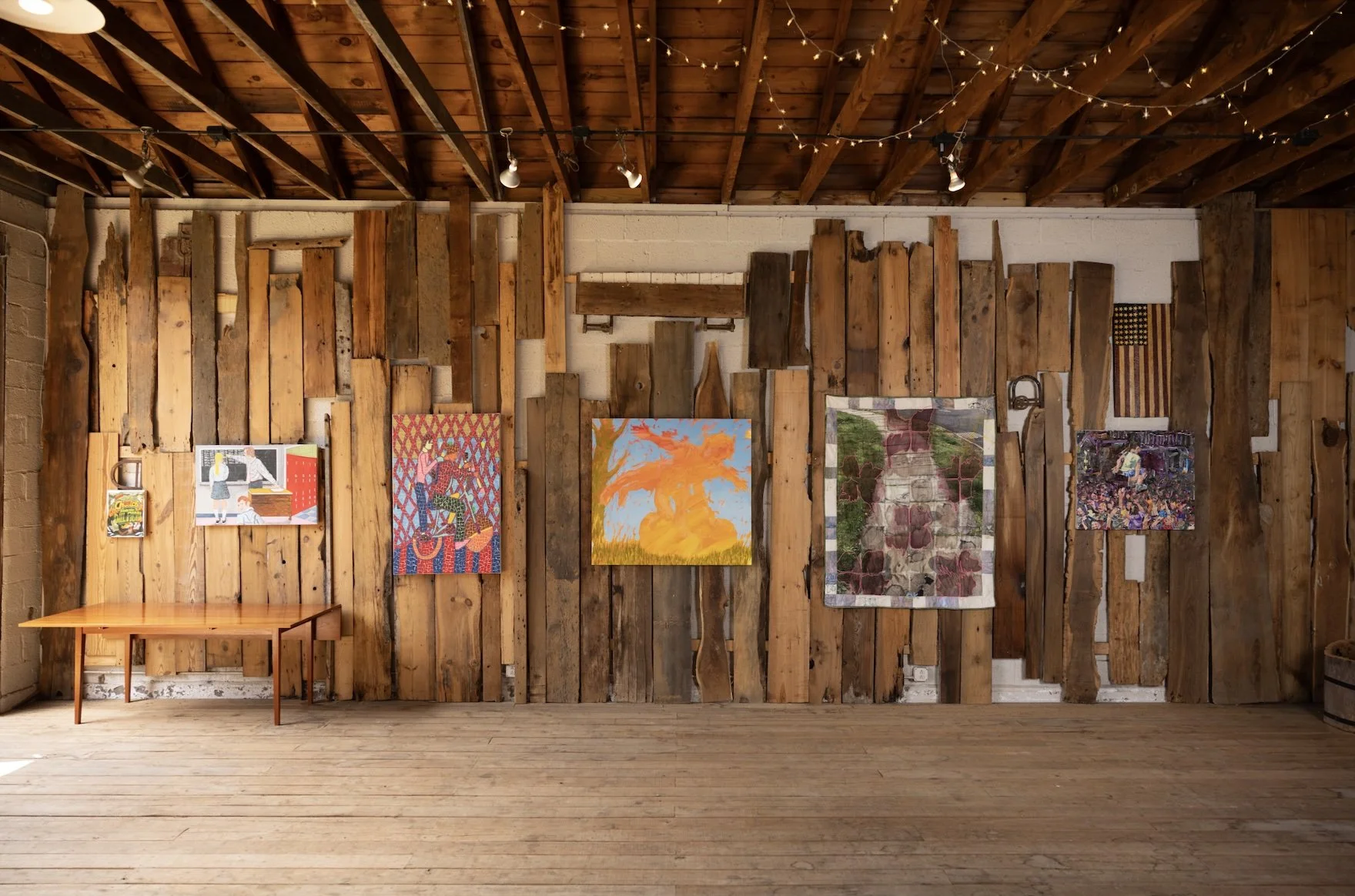
The Macedonia Institute
This past winter, having decided we would no longer open regularly on Friday nights, we really leaned into the event programming–packing the schedule with a diverse set of offerings which we knew would both test us as well as testing community tastes. Everything sold out which was great, but what we had not anticipated after three years of steady but manageable growth in our brunch business was that we would suddenly see a 50% increase in the number of meals we are serving in the cafe each weekend. The success of our weekend brunches combined with all the evening events has been challenging, and has helped Julie and me realize it is time to step back a bit and let Peter take the lead next year.
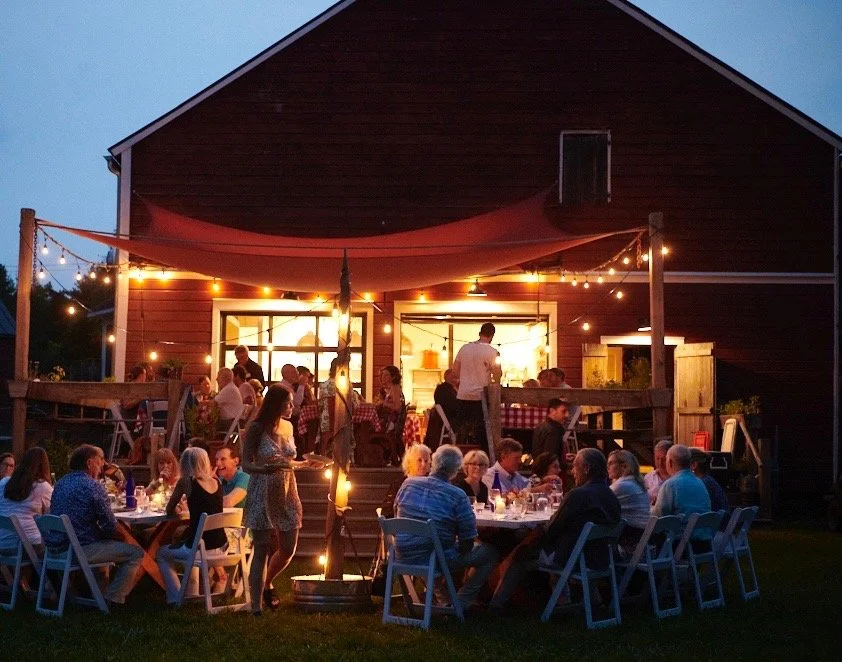
7th Annual Farm-To-Table Dinner, 2023
Luck is so crucial in any life, and lucky us that by simply following Matthew up to Hudson, an area about which we knew nothing, we found a perfect place to become a family of farmers, preservationists, and finally restaurateurs. This unexpected turn really connected us to a place and brought an awareness of a whole set of new issues–some of which I have written about in earlier newsletters–sustainability and preservation; organic practices and carbon footprints; the joys of inclusive employment; and the frustration of US agricultural policy and farm bills that deliver 85-90% of the benefits to corporate farms growing three or fewer crops, while providing no support to small-scale, family farms using sustainable practices. We have learned a lot, and perhaps most importantly learned the pleasure of hard work.
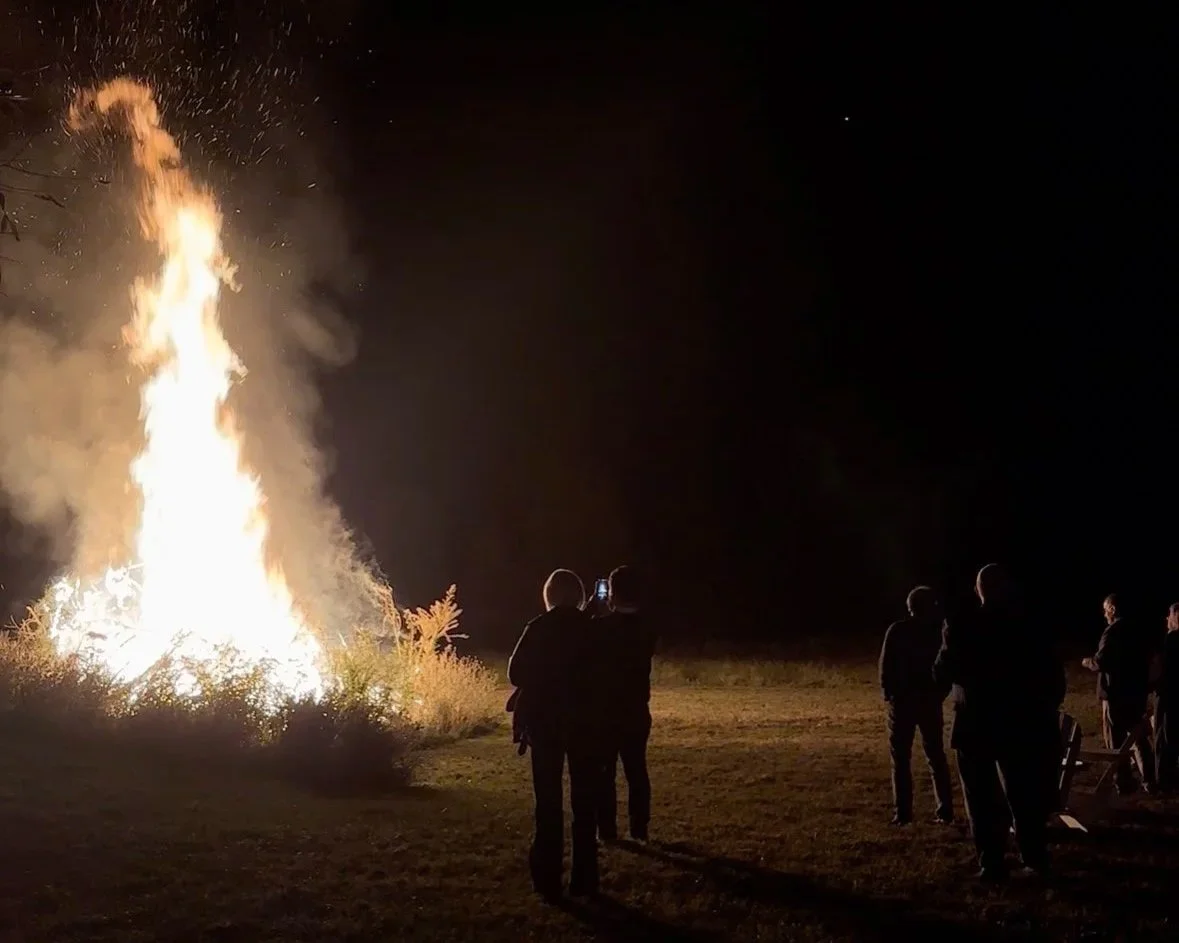
As we lit the bonfire at the end of our 9th Annual Farm-to-Table dinner in September, I looked around at tables full of people exchanging contact information as well as friends who had been coming to the event together for years.
Our family had flown in from Michigan and California to help us put on the evening. In a fractured and lonely world, it felt pretty good to have become a place where people come together to celebrate community with an expectation of meeting (and liking) new people.
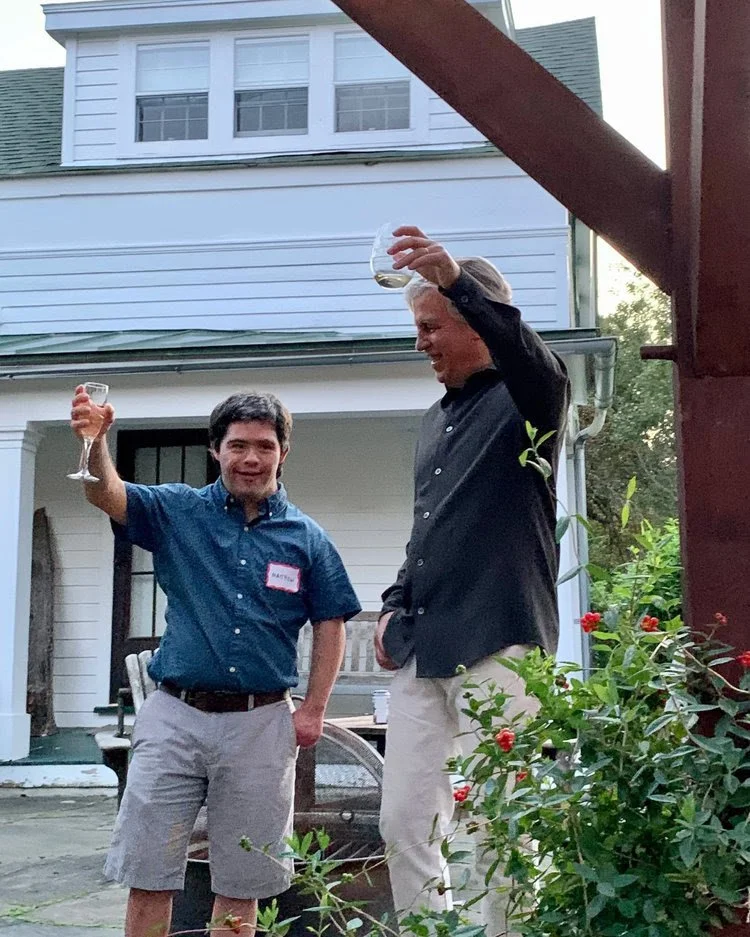
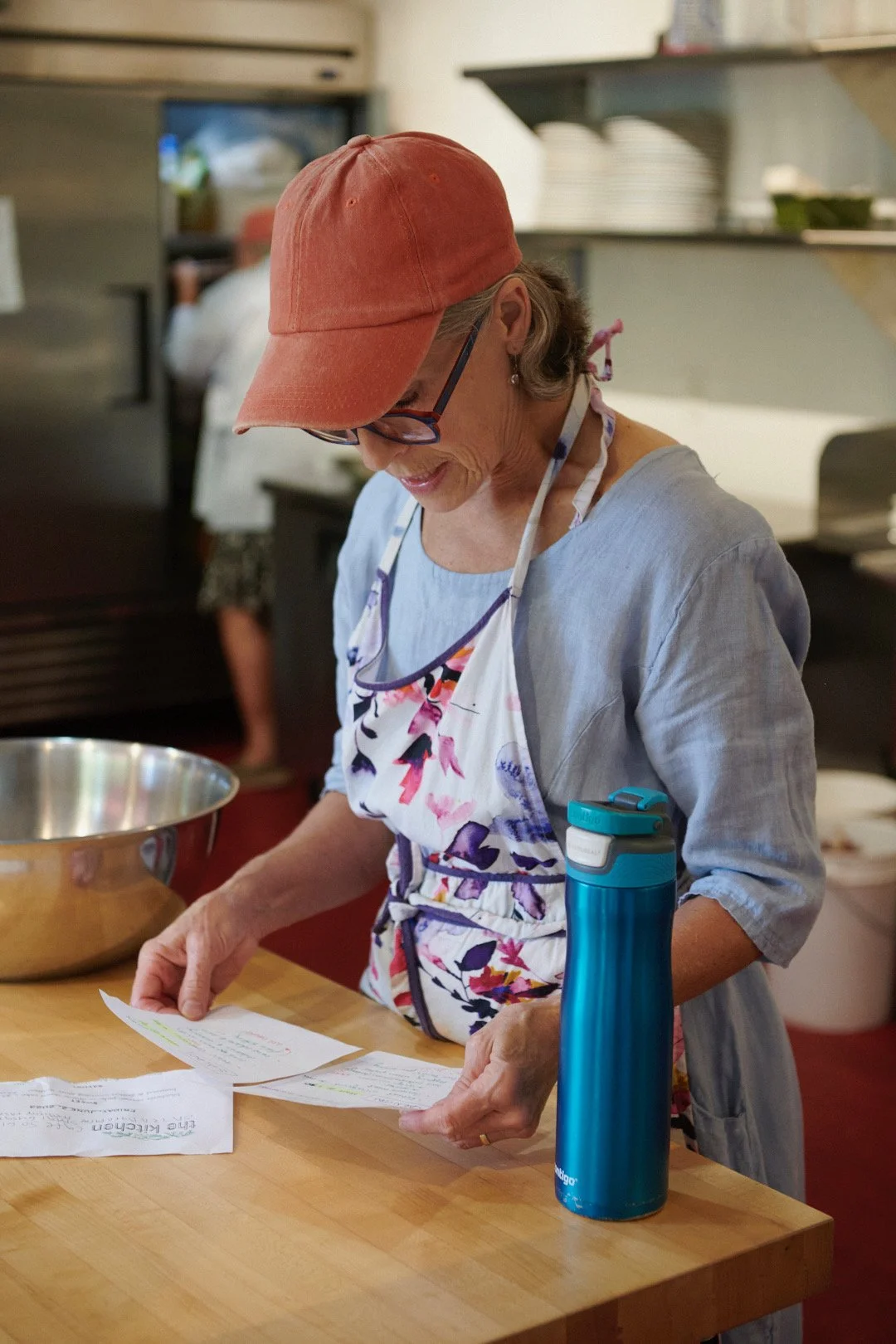
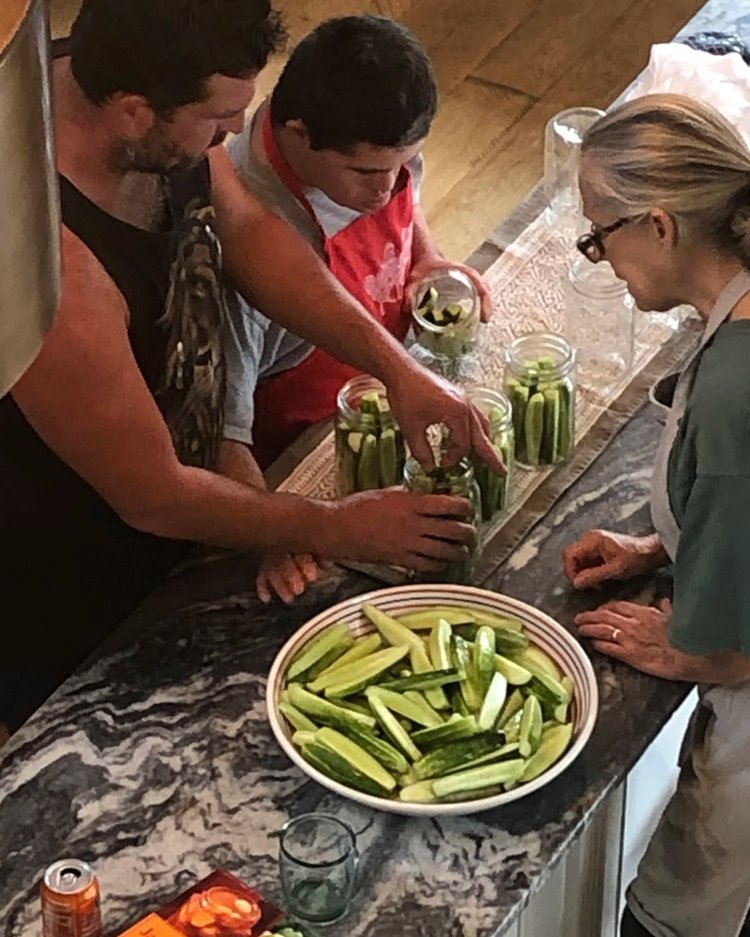
Pictured above: Matthew opens all events, “The Boss”, making pickles
Each year the word of our efforts spread, and this year felt like a tipping point with so many new people visiting. We miss seeing some of our favorites from earlier years, but know they will continue to support us as time allows. We are open through October, which means Julie and I have only three weekends left at the helm. Please come visit, offer your thoughts to Peter, Matthew, Nora, and Julian on what should come next, and let us thank you for four interesting years.
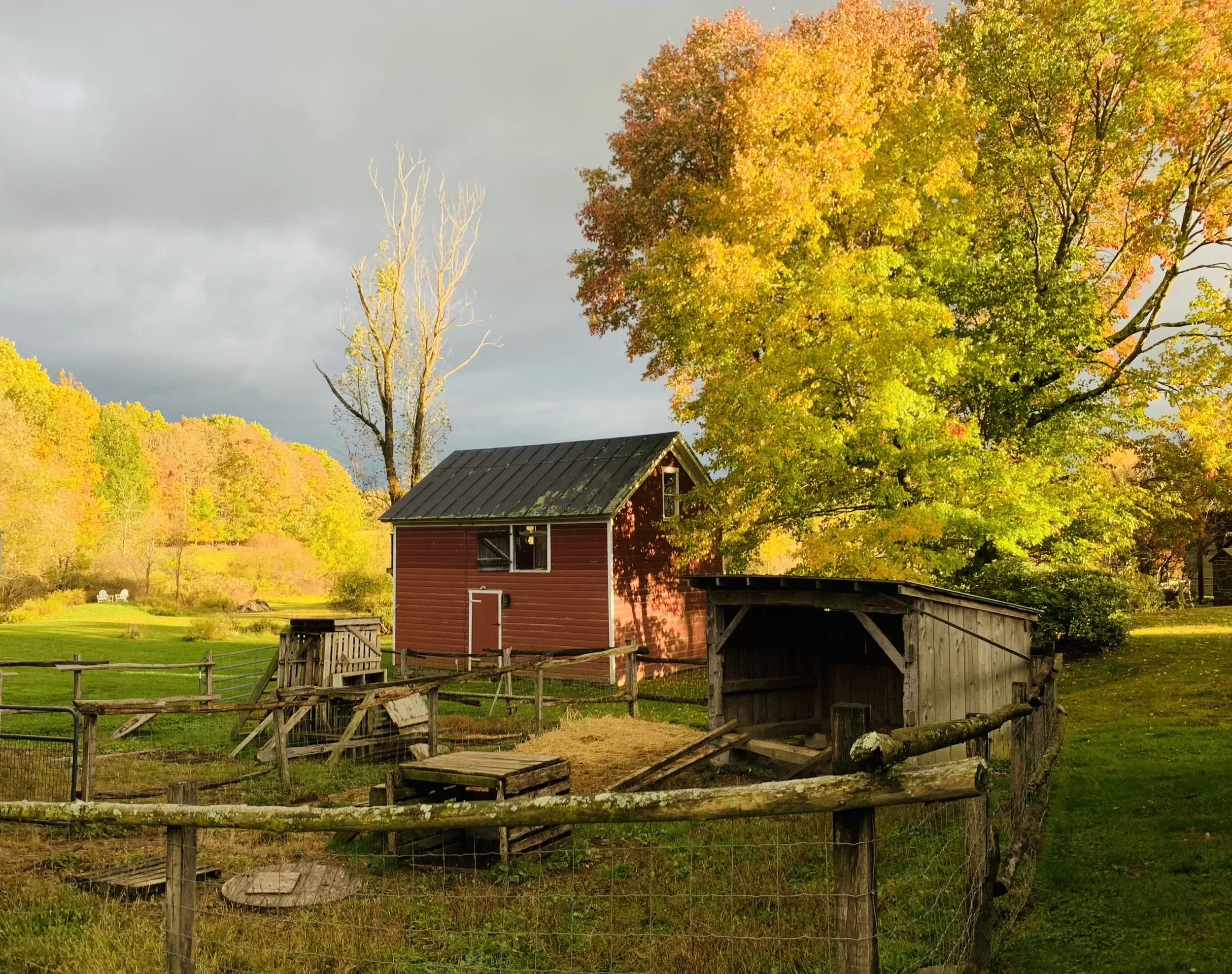

August 2025
We have reached the midpoint of our fourth year of operation having already served more people than we did in the entirety of any of our previous three seasons.
Transitions
We have reached the midpoint of our fourth year of operation having already served more people than we did in the entirety of any of our previous three seasons. During Upstate Art Weekend, Peter went through 34 dozen eggs and we closed early both days because everything had sold out! This year we frontloaded the events calendar hosting two wonderful “dinner and a show” evenings –one opera, the other Cuban Jazz–as well as a cooking class, art class, a pizza night, a guest chef evening, concerts while also partnering with both The Macedonia Institute to put on another great art show in the gallery barn (written up in Vogue and several other NYC media outlets) and with Spencertown Academy to present a lovely concert by Jim Lauderdale from Nashville.


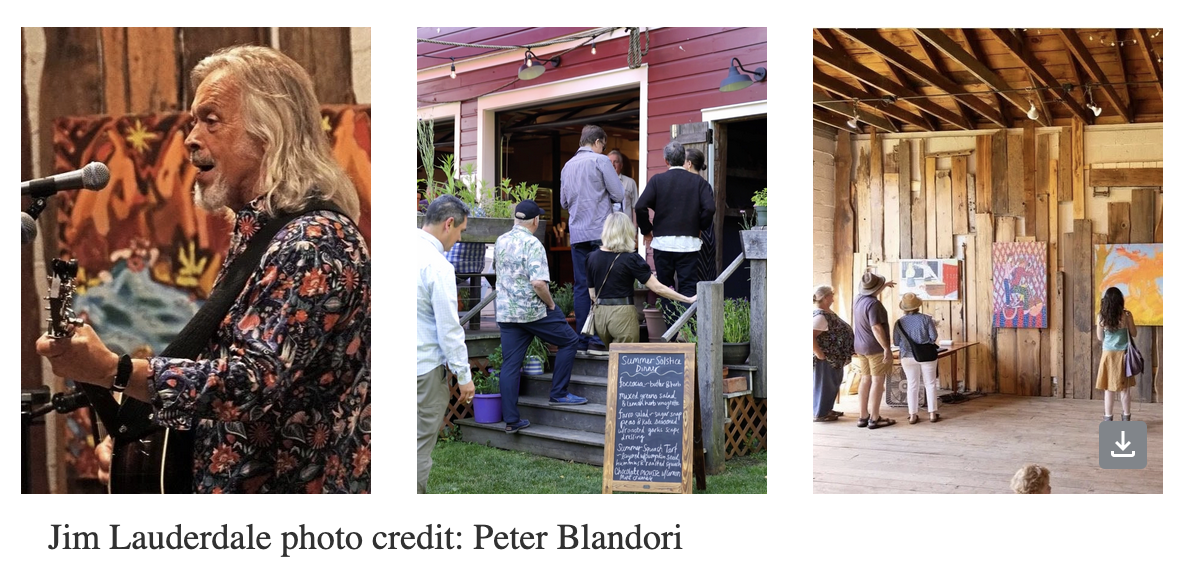

An exciting three months, a lot for our family-run operation to handle, and we took this weekend off to recharge and reassess. What has become clear is it’s time for Julie and me to begin to step back. We started this “retirement” endeavor a little late in life, and did so without a real long term plan other than to share our beautiful 235 year-old farm with the community, serve really good food made with the freshest possible produce grown in our fields, and hopefully create a community around things important to us.
We wanted each member of our family to play a meaningful role in whatever The Kitchen became, and we hoped to build partnerships with local organizations that we believed in. And being relatively new to the area, we hoped to make new friendships.
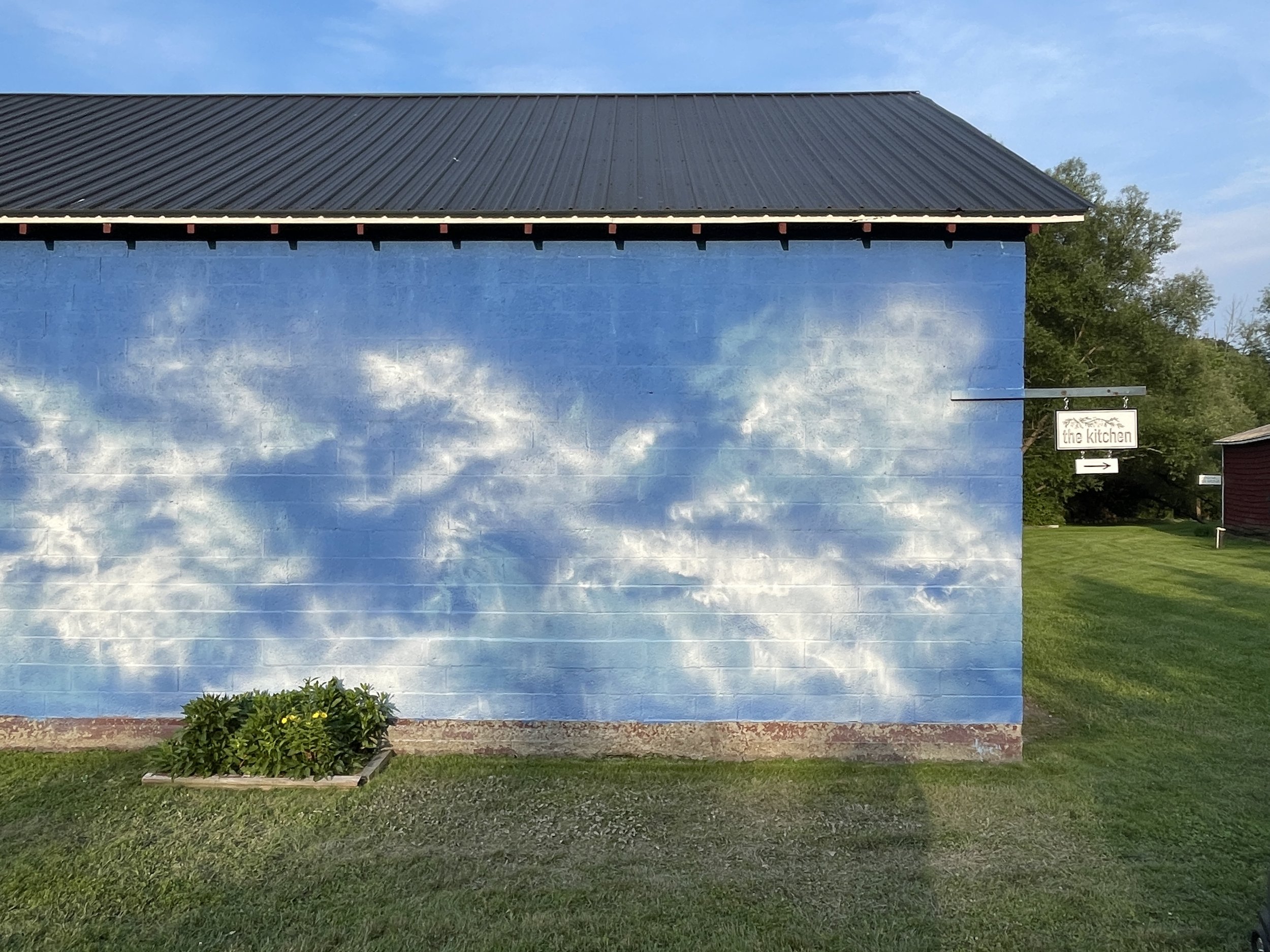
Our dreamy new mural by William Rogers
We did little marketing other than the hand-painted signs out front, this irregularly written newsletter, and posting the daily menu on Instagram. Things worked out thanks to word of mouth and we grew, but managing a small farm and a business in your 60’s/70’s does take a toll. Next year Peter (and Matthew) plan to take charge, the exact shape of the new and improved Kitchen at Ten Barn Farm is still taking shape. Knowing that the end is near has energized us, and Julie and I would love to see you often in these final months in the cafe and hope you will attend one of the upcoming events.
Here are the upcoming events at the farm:

August 22
Harvest Dinner With Guest Chef Michael Castellano 7-9:30pm. Info and tickets here.

August 24
The inaugural meeting Ten Barn Farm-Kinderhook Books–Lit and Lunch Book Club 1-2pm Info and tickets here.

September 6
Chekhov in the Barn a benefit performance by The Camphill Hudson Players. 6-8:30. Info and tickets here.

September 13
9th Annual Ten Barn Farm-To-Table Dinner. Our signature event of the year and potentially our last hurrah, so we will be pulling out all the stops starting with champagne and fine wine reception + appetizer buffet on the upper patio as the sun sets. Then we move to candle-lit tables in The Kitchen for dinner, ending the evening with a bonfire. This event is sold out. Call Roby if you would like to be added to the waiting list 908-295-9978.
You can also check out the full 2025 events calendar here.
Coming in the next newsletter–Many folks come into the cafe, look around at all the ancient barns, the gorgeous animals and ask, “So this is your place and this is your family? Tell us the story.” I begin to explain, but because we have been so busy, Julie quickly gives me the side-eye as other orders need to be taken to other customers. In my final newsletter of the season, I will attempt to tell the story, share a few lessons learned and a few reasons why Columbia County (a place we moved to solely to be near Matthew) turned out to be such a great place for us and The Kitchen at Ten Barn Farm.

June News!
The big news is early Thursday morning one of our mama goats, Katrina, delivered Chloe and Winnie.

The big news is early Thursday morning one of our mama goats, Katrina, delivered Chloe and Winnie. What a treat watching Katrina’s maternal instincts kick into gear immediately after giving birth, cleaning up her babies and getting them ready for life (and my photos.)
In other news, today a muralist, William Rogers, arrives from Boston to paint a mural on the side of the performance barn. And we are thrilled with how well our solar project worked out-- marrying new tech with a very old barn.
With Peter's fields producing and (hopefully) some sunny weekends ahead, we would love to serve you a farm fresh brunch (and while here you can meet Winnie and Chloe. )
The Opera and Italian supper a few weeks back was a grand evening (see pictures and comments below.) There will be another one on August 29th (tickets here) and it will sell out early.
For the third year in a row, Dusty Wright and Friends put on a great show before a sell out crowd. In these dark times, it is a blessing to feel the energy and sense of community during these evening events.


“The evening was a glorious blend of food, wine, laughter, and song.”

“Thank you and your family for the opportunity to enjoy these kinds of events in an amazing place.”
“We have been smiling ever since! Can’t wait for the next show.”
Here’s what’s coming soon. Please reserve your spot and join us.

June 13 — Pizza night with the Pizza Wizard Eric Schmall. Eric will make 30 pizzas. Come enjoy the farm at twilight, have a glass of wine before your pizza dinner. Reserve your pizza, a TBF kale caesar, and dessert for $40 dollars. 5:30-8pm Info and tickets here.

June 20 — Our annual Summer Solstice Dinner with guest Chef Quinn Pennea. Who can forget Quinn's elegant and inventive menu at last year’s guest chef dinner–lemon ricotta raviolis with his delicate pasta and the amazing snow pea mousse dessert. 7-9:30pm Info and tickets here.

July 11 — Latin supper and Buena Vista Social Club concert. Francois Wiss Trio, fresh from their appearance at the Blue Note in late June, will perform at Ten Barn Farm. Join us for supper and the show--only four seats left. 6-9:30pm Info and tickets here.

July 19 — Jim Lauderdale in concert. A Spencertown Academy and Ten Barn Farm co-production. Lauderdale is a Grammy and Americana Music Association award-winning singer-songwriter. He’s created a body of work spanning 37 albums and recorded by artists such as Patty Loveless, George Jones, Shelby Lynne, Solomon Burke, The Dixie Chicks, Blake Shelton, and George Strait, 7:30-9:30pm. Info and tickets here.

Aug 22 — Harvest Dinner with Mike Castellano. The fields will be bursting in late August giving CIA trained chef Mike a wide range of possibilities. Mike has been a chef in restaurants across the country, and we are excited to have him back in the kitchen. 7-9:30pm. Info and tickets here.
You can also check out the full 2025 events calendar here.
See you soon,
Julie, Peter, Roby, Matthew, and Andrew Harrington

Eat Local
Many of you have heard me talk about the fact that the eggs from our healthy and happy chickens travel 15 yards and the veggies 150 yards to your plate when you eat at The Kitchen.
Spring is in the air!
Many of you have heard me talk about the fact that the eggs from our healthy and happy chickens travel 15 yards and the veggies 150 yards to your plate when you eat at The Kitchen. (This year the eggs will be making the same trip, but the vegetables will have to travel an extra 50 yards because Peter is rotating his fields for the health of soil.) Over the past few decades, there has been a pretty significant shift in how people think about food, from the methods of production to the environmental impact of its journey to our plates. Supporting local farmers and food producers is not just about enjoying fresher produce, but also about bolstering the local economy, reducing environmental impact, promoting sustainability, and fostering stronger community connections. Freshness and Nutritional Value
The most obvious benefit of buying locally produced food is its freshness. The short distance from farm to plate means that produce is harvested at the peak of ripeness, resulting in food that is not only more flavorful but also retains more of its nutrients. Compared to food that has been grown far away and shipped across the country or even internationally, often sitting in storage depots along the way, local food has a better chance of maintaining its nutritional integrity. Here at Ten Barn Farm, or with any local farmers selling at a farmers’ market, the food reaches your plate within a day or two of harvest, making it a healthier choice.
Additionally, local farms like ours grow their crops using practices that prioritize soil health and crop diversity, which results in tastier produce richer in nutrients. This approach contrasts with the mass production methods of large-scale industrial farming, which may focus more on high yields and uniformity than on nutrient density or flavor.


Environmental Benefits: Reducing Carbon Footprints
Another compelling reason to buy locally produced food is the environmental benefit it offers. The environmental impact of transporting food long distances contributes significantly to greenhouse gas emissions. According to Foodwise, a San Francisco based food-education organization, the average dinner served in the U.S. travels 1,500 miles to the plate.
Moreover, local farms are more likely to use organic or regenerative farming methods, which not only protect the soil but also conserve water and energy, and promote biodiversity in the surrounding ecosystem. No chemical fertilizers or pesticides….

Seasonal Eating and Biodiversity
Supporting local food systems encourages seasonal eating, which has both health and environmental benefits. Eating foods that are in season helps us both reconnect with the natural rhythms of the land and helps us better appreciate the cycles of growth. Seasonal produce is tastier, more affordable, and abundant during its peak harvest time. Moreover, when you eat seasonally, you diversify your diet, encouraging a varied range of fruits, vegetables, and other products which helps maintain both personal and planetary health.
Strengthening Community Connections
Perhaps a bit harder to measure, but hugely important to us as we begin our fourth season and look forward to seeing all our friends after a long winter, is the sense of community that grows up around buying locally produced food. When you come into The Kitchen at Ten Barn Farm or buy from local farmers, you are connecting with the individuals who produce the food, which builds trust and understanding–you have the opportunity to ask questions about the farming practices, soil health, and develop a better understanding of the care that goes into the growing of the food you eat. Investing in local food systems, we not only ensure that we eat fresher, healthier food, but we also contribute to the wellbeing of the local economy, community, and the planet.
Upcoming Events:
Please support us and buy your tickets now!
May 10 — Cooking class and book launch with Bobbie Lloyd, CEO of NYC’s Magnolia Bakery. 11-1:00pm Info and tickets here.
May 17 — Opera night and Italian Supper–We have a fabulous night planned starting with an Italian supper in the cafe at 6pm followed by an evening of arias and fun in our performance barn, beginning at 7:30pm. The five NYC performers will be joining us for dinner and might give us a preview of the evening while we dine. Info and tickets here.
June 6 — Dusty Wright and Friends concert. Dusty is bringing the whole band for his annual concert. Always a fabulous show. 7:30-9:30pm Info and tickets here.
June 13 — Pizza Night. Our first-ever Pizza Night with Erik Schmall. Fabulous pizzas with beer and wine available. No reservations required. 5:30-8:00pm
June 20 — Summer Solstice Dinner with Chef Quinn Pennea. 7-9:30pm Info and tickets here.
July 11 — Cuban jazz and dinner. Tickets are going fast for our Cuban dinner and Buena Vista Social Club concert with the Francois Wiss Trio. (The trio will be headlining at the Blue Note a few weeks before appearing at Ten Barn Farm!) 6-9:30pm. Info and tickets here.
July 18 — Fancy Feast Supper Club Dinner celebrating Upstate Art Weekend with a School’s Out theme 6-9pm. Info and tickets here.
July 19 — Jim Lauderdale in concert 7:30-9:30pm. Mark your calendars.
August 22 — Harvest Dinner With Guest Chef Mike Castellano 7-9:30pm. Info and tickets here.
August 29 — Italian Supper and Opera 6-9:30pm. Info and tickets here.
September 13 — 9th Annual Ten Barn Farm-To-Table Dinner. Please sign up now to reserve your spot 6-9:30pm. Info and tickets here.
You can also check out the full 2025 events calendar here.
Please make plans with friends and buy tickets now, we can’t wait to see you often this summer,
Julie, Peter, Roby, Matthew, and Andrew Harrington

Spring Stirrings
Spring is in the air! We have spent our off-season imagining what’s possible for 2025.
Spring is in the air! We have spent our off-season imagining what’s possible for 2025. With so much friction in the world pulling people apart, I have been thinking about how The Kitchen at Ten Barn Farm can be a bit of a sanctuary from all that is unsettling, and hopefully help strengthen our community bonds. We certainly love that so many people value the efforts our family makes to produce the delicious and healthy meals that travel less than fifty yards from the fields to your plate, but this year can we add to the great food and beautiful setting more ways for people to connect? Can we create more of a sense of community where people feel they belong? The research suggests that a sense of belonging is as important to our health as eating the organic dishes we serve.
When I think of the highlights from last year, they were all evenings where a large group of people shared an experience:
- That beautiful September evening of the farm-to-table dinner where our relatives had flown in from around the country to help us put on a four hour event where guests bonded–our big family serving your family and friends added to the warmth of the evening.
- The opera night in the gallery barn with the huge doors open to the late summer night sky and those amazing artists sharing their talents in an intimate space. In the crowd’s roar was a clear sense of the community coming together.
- And finally, the performance of Forgetful Divas by the Camphill Hudson Players and Operation Unite; the joy of the diverse group of actors and the energy of the dancers in the final scene with the audience clapping to the beat.


We want to try and create more moments like those in 2025. Below you will see that there are many ways to join our merry band–cultural evenings with regional music and food, a new book club, a cooking class, Friday night dinners, family art classes, and, of course, brunch any weekend from late May through October.
So here’s what we have planned for summer 2025:
MAY EVENTS
May 11 — Baking class and book signing hosted by baker extraordinaire, Bobbie Lloyd, CEO of NYC’s Magnolia Bakery. Info and tickets here.
May 12 — Mother’s Day brunch. Bring Mom to brunch, visit the goats, and see the changes we made this winter.
May 17 — Italian Supper and Opera–We are so excited that the amazing Cafe Tacci will be returning to open our season. The evening will start with a traditional Italian supper followed by an evening full of arias and fun. This is the first of our 2025 cultural evenings (regional food and the arts). Info and tickets here.
May 24-25 — Regular 2025 hours begin - Saturday and Sunday 9-2.
JUNE EVENTS
June 6 — 3rd Annual Dusty Wright and Friends concert. Info and tickets here.
June 13 — Pizza Night. Wait ‘til you taste Erik Schmall’s pizzas! No reservations required.
June 20 — Summer Solstice Dinner with Chef Quinn Pennea. Info and tickets here.
JULY EVENTS
July 5 — Opening of The 2025 Macedonia Institute (TMI) art show “Schools’s Out”. We are excited to partner with The Macedonia Institute for the second year in a row, a family-run artist residency in Chatham. Following last year’s show at Ten Barn Farm—featured in The New York Times, Hudson Valley Magazine, The Observer, and more— this year’s exhibition, School’s Out, celebrates the joy and exuberance of childhood through a group show featuring former TMI residents. Starting at 10 AM, join us for art programming for kids (and adults!), a wonderful art show, nostalgia, and community.
July 11 — Buena Vista Social Club Concert and Cuban supper. Our second cultural evening featuring the Francois Wiss Trio fresh from headlining at the Blue Note. Info and tickets here.
July 12 — The Macedonia Institute Family Arts Class in the Gallery Barn. Starting at 10 AM, the whole family can make an art project to take home.
July 18 — Fancy Feast Supper Club dinner celebrating Upstate Art Weekend with a School’s Out theme. Info and tickets here.
July 19 — The Macedonia Institute family arts class celebrating Upstate Art Weekend. Starting at 10 AM, join us for another fun, creative session for families to explore the School’s Out show and make their own artistic masterpieces.
July 19 — Jim Lauderdale in concert. Singer-songwriter concert with renowned Nashville musician. A Spencertown Academy and Ten Barn Farm co-production. Save the date. Tickets on sale in May through the Spencertown Academy website.
AUGUST EVENTS
August 22 — Harvest Dinner With Chef Mike Castellano. Info and tickets here.
August 24 — Lit and Lunch Book Club The first meeting of the Ten Barn Farm-Kinderhook Books club. Julie’s lunch will tie-in with each month’s book selection. See Roby (or Mindy at Kinderhook Books) for more information. 1 pm.
August 29 — Italian Supper and Opera. If you couldn’t get tickets to their appearance in May, here is a second chance. It is a remarkable evening. Info and tickets here.
SEPTEMBER EVENTS
September 6 — The Camphill Hudson Players performance and benefit. Tickets available soon through Camphill Hudson.
September 13 — 9th Annual Ten Barn Farm-To-Table Dinner. Ten Barn Farm’s signature event of the year. Please come out to celebrate the end of the season and support the kitchen and farm. Info and tickets here.
September 20 — Second meeting of the Lit and Lunch Book Club. 1pm.
OCTOBER EVENTS
October 19 — The Lit and Lunch Book Club final meeting of the season. 1pm.
You can also check out the full 2025 events calendar here.
We can't wait to see you, Julie, Peter, Roby, Matthew, and Andrew Harrington Ten Barn Farm

Spring 2024 Newsletter
Recently I have been planing hundred year-old barnwood, stacked up decades ago, in hopes it might find a new purpose one day…

Recently I have been planing hundred year-old barnwood, stacked up decades ago, in hopes it might find a new purpose one day. Before running the board through the planer, I first have to remove all the forged nails. As I pull those old nails out, I’ve been thinking about the person who first pounded them in. Based on the dried hay and feed on the boards, the nails were used to build a stall for draft horses--those horses were the primary source of power for the first 150 years of Ten Barn Farm. And now here I am, seven generations later, pulling those square nails out in order to turn that wood into small tables on which we will soon serve wine to Kitchen guests as the setting sun hits the hillside. (That gorgeous view beyond the creek where the cattle graze has surely brought peace to generations who've lived here.)
More and more as we make new plans for our ten old barns, I think about those who made this farm so beautiful, and how lucky we Harringtons are to live here and share the fruits of their labor with others. What might the hammerers of those nails think of what we are doing now? They surely would never have imagined that those draft horse boards would one day turn into tables on which fine wine is served on this property. But we hope they would appreciate both that we are striving to keep the farm a farm, and that the barns they built centuries ago are still standing. And I'm sure they would be happy that the land they cultivated is still being appreciated for what it produces and that the produce now feeds so many people.
In these coarse times, springtime on the farm is a shelter from the news. When I stop watching my news feeds and get my hands in the soil, frustration gives way to reverence for all the things that happen naturally–the chickens are laying eggs again as the days grow longer, the seeds sprout, the one-hour old goat stands up on shaky legs and immediately suckles, the sun sets on the hillside. And then there is living, as we do, surrounded by ten barns that have stood the test of time. Come visit us when you need a little peace and quiet (and a farm fresh meal.)
As the crew at The Kitchen at Ten Barn Farm looks back on 2023, we feel grateful for the community that’s supported our family venture. Grateful for all the dinners, classes, and special events that sold out, grateful for Matthew working so happily with us on Sunday's, grateful for all of you who have become friends and now help spread the word. And with two years under our belts, we are planning for the 2024 season.

The 2024 Season

The big news is we just got our wine, beer, and cider license! Now that we’re no longer limited to four 24-hour licenses per year, exciting new possibilities have emerged. A new focal point for our energies will be Friday evenings when we will be open from 4:00-8:00 offering nimbles and appetizers from the farm, and a list of wines by the glass curated by our son, Andrew, with 15 years experience in the fine wine world. On Fridays throughout the season, we will host coffeehouses, art exhibits, and themed evenings. But perhaps the best reason to come on a Friday evening is to watch the sun set against the hillside with glass in hand. The early evenings here are so beautiful as the sun goes down. We invite you to start your weekend with us with a glass of wine or a beer before you head elsewhere, or stay for the sunset.
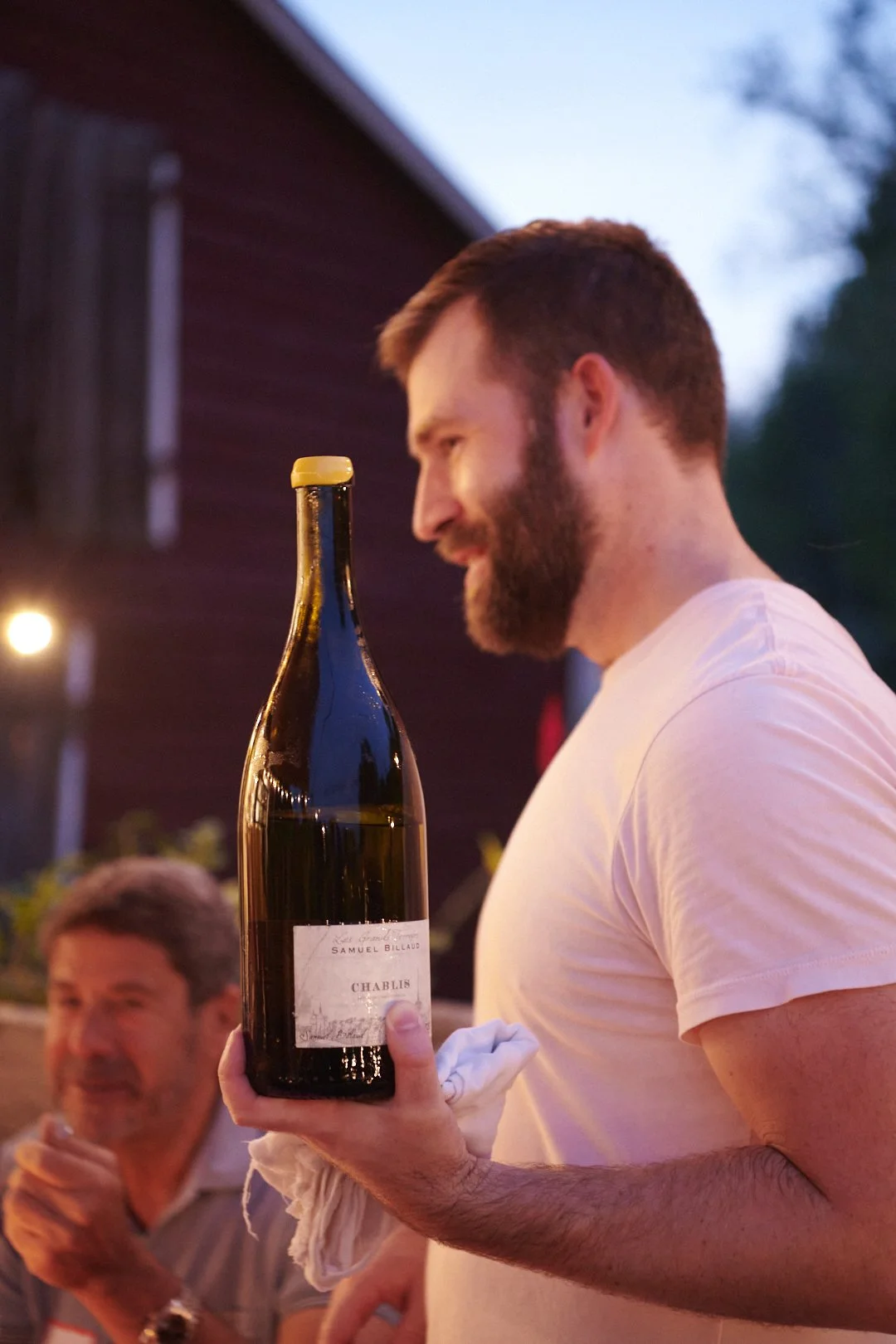
Saturdays and Sundays we’ll be open as usual from 9-2 for breakfast and lunch. The plan is to do two special event dinners in 2024--a summer solstice dinner on June 21st and our 8th annual farm-to-table dinner on September 14th.
As you will see on the calendar, we will again do a cooking class, hold a few coffeehouses, and host a live theatrical performance by the Camphill Hudson Players. Finally, we are excited about three new collaborations this summer: first, we’ll be hosting a few guest chefs on Fridays, second we’ll be welcoming The Macedonia Institute to Ten Barn Farm where works created by their artists-in-residence will be on display in both the gallery barn and the big barn with the artists joining us on a few summer Fridays, and finally several local artists will teach art classes in the gallery barn on select Saturdays.

And who knows maybe a monthly Friday movie night, game night, or book discussion......Follow us on Instagram (@thekitchenattenbarnfarm) for the latest event information and daily menus.
We open for the season Memorial Day weekend and will again host three preseason events: a cooking class (April 27), Mother's Day brunch (this year with mimosas served!) and after such an amazing show last year Dusty Wright and Band will return on May 18 to kick off the coffeehouse season. Sign up soon for those events, as well as the summer solstice dinner and the farm-to-table dinner, all sold out early last year.
Happy spring,
Roby, Julie, Peter, Matthew, and Andrew Harrington
August-September Newsletter
Our youngest son, Matthew, has long dreamed of having a job and earning a paycheck, but finding supported employment in Columbia County is a challenge.

Our newest employee
Our youngest son, Matthew, has long dreamed of having a job and earning a paycheck, but finding supported employment in Columbia County is a challenge. Those who have come to the Kitchen on a Sunday this summer know that Matthew is now our head waiter, and this past weekend (with Emma having headed back to college), he is now working the cash register. He is so pleased with his new responsibilities and delighted that his efforts bring a paycheck after he finishes cleaning up Sunday afternoons.
The Kitchen has always been a family affair with Julie the head chef and boss, Peter doing the essential work of growing the vegetables as well as much of the cooking, Andrew is our sommelier for all dinners, and I am the grounds crew, florist, and front of house person. Finding one’s way in the world is a constant challenge for everyone, but for people with special needs the transition to adulthood is particularly hard. The Americans with Disability Act, a truly enlightened piece of legislation, mandates that all school districts provide all individuals with special needs an education in the least restrictive environment until they are 21. The bill passed the Senate in 1990 by a vote of 91-6, bipartisanship at its best! Lowell Weicker, Jr. (R-CT) was the driving force behind the bill having led the Senate investigations into conditions in state institutions that “housed” the disabled, places of isolation and segregation. In addressing Congress before the vote he said, “Disabled persons may represent a minority in this country, but they are a minority that any of us may join at any time….you can secure to my son (Weicker had a son with Down Syndrome) and his 43 million peers happiness that only comes with love equally devised and administered.” Weicker died a month ago.
Things get more complicated when one ages out of the educational rights guaranteed under the ADA, options narrow. It has taken Matthew years to realize his dream. And the way his efforts are being received by you all fills me with gratitude and happiness. His exuberance for his work at The Kitchen energizes the whole family (and I hope, many of our guests).
Matthew is a member of the Camphill Hudson community.
Farm-to-Table Dinner on September 9th–7 seats left Reserve your spot here.
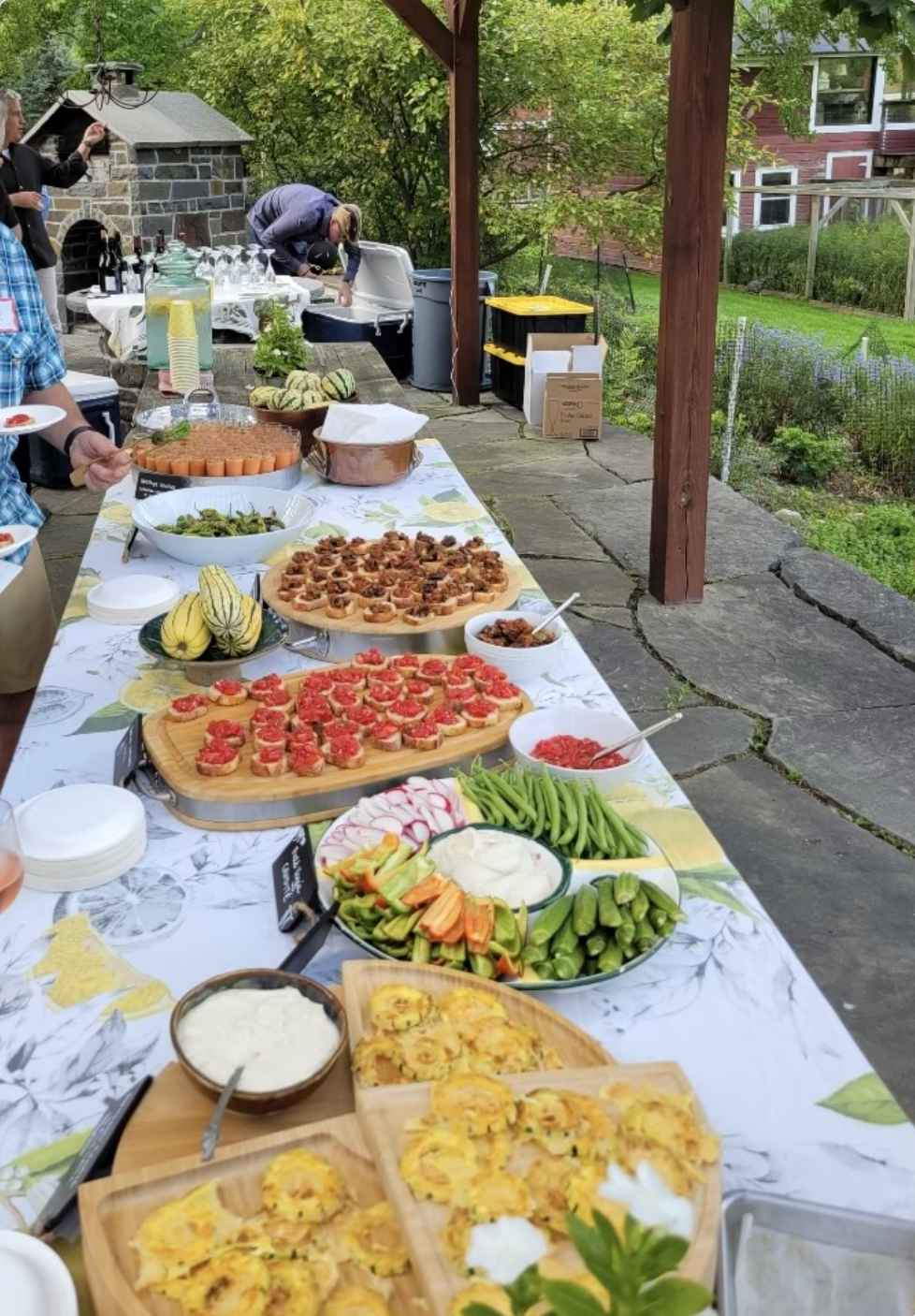
The menu: The evening begins with a grand appetizer spread served up on the patio, including shrimp ceviche, goat birria on warm corn tortillas, garbanzo beans con chile, ensalada de frutas, and many other treats.
Fine wine and champagne will flow. At sunset we all walk to the kitchen for a gourmet Mexican-inspired meal with wines from around the world — some large format, some 10-20 years old.
The evening ends with dessert and an aperitif as we light the bonfire.
The wines: We will be serving a wide range of older wines from around the world including a double magnum of 2000 Reserve Cab from Robert Mondavi and a couple of mags 2001 CVNE “Imperial” Gran Reserva.
Future events:
Autumnal Dinner - 10/13 Reserve your spot here.

10/21 - Dramatic Performance: Critically Acclaimed ‘Happiness in the Spotlight’ - Written by Jody Brookes and performed by the Camphill Hudson Players will be performed in the gallery barn. Find out more here.

June-July Newsletter
With hot weather in the very early spring causing many trees and plants to bud out early, followed by a cold snap damaging, and even destroying, some crops before the season got started, I am reminded how farmers are on the frontlines of climate change as they try and adapt to a world where there is no more normal.
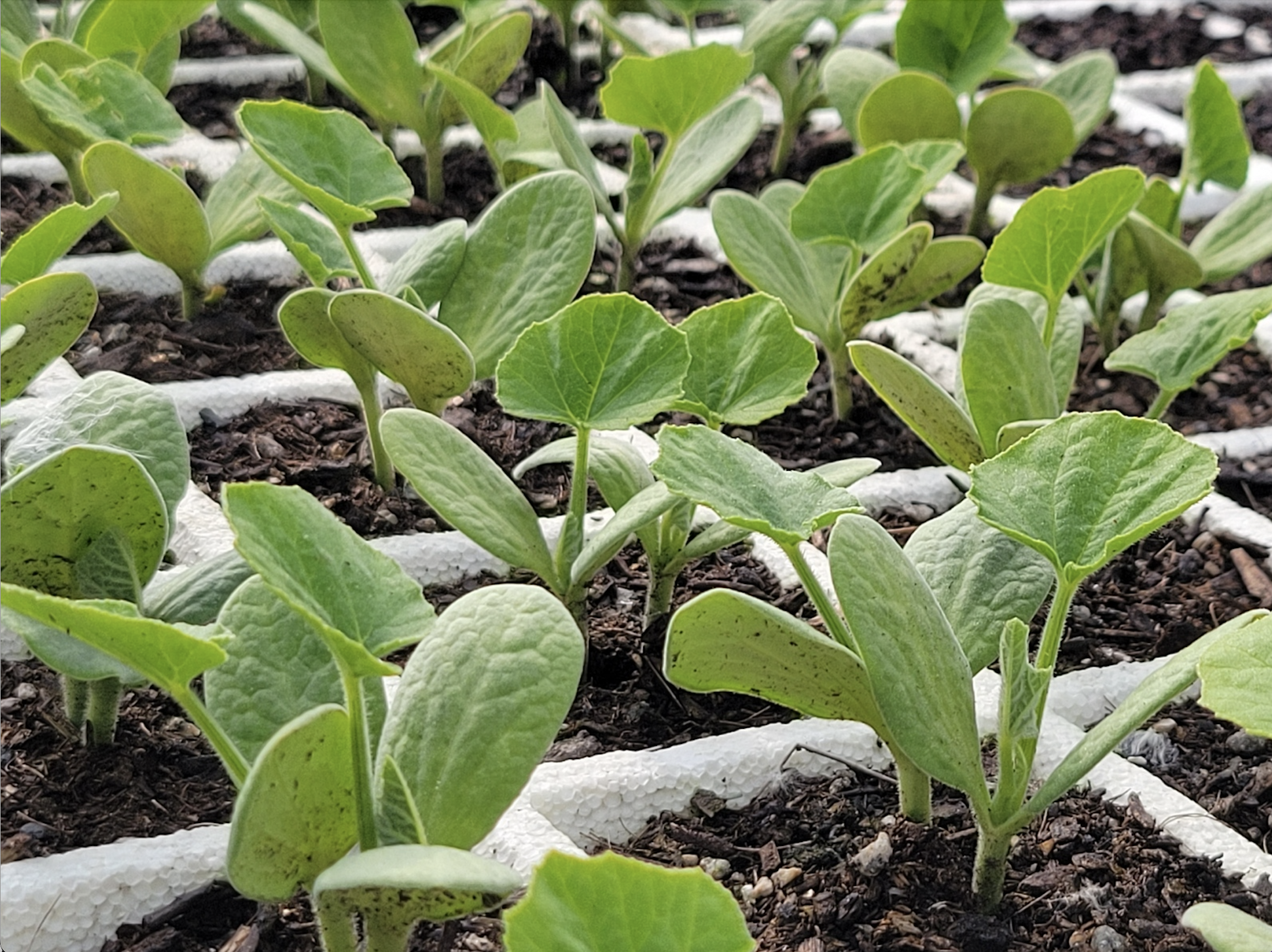
With hot weather in the very early spring causing many trees and plants to bud out early, followed by a cold snap damaging, and even destroying, some crops before the season got started, I am reminded how farmers are on the frontlines of climate change as they try and adapt to a world where there is no more normal. This got me thinking about who will be the farmers of the future.
A few facts for your consideration:
Of the 900 million acres of cultivated farmland in the US, three crops (soybeans, corn, and wheat) are grown on more than ⅔’s of that land. The current system of farm subsidies perpetuates this lack of crop diversity as entrenched interests support the status quo making it all but impossible to stimulate innovation through subsidies. And yet, crop diversification is so important to soil health.
The average farmer in the U.S. is a 58 year-old white male.
Between 2012-2017 there was a 2% increase in the number of young farmers, but during that same period there was an 11% increase in the number of farmers over 65.
The average American spends only 8.6% of their disposable income on food and that number has been trending downward.
Americans have been conditioned to think low food prices are normal, but there is ample evidence that the hidden cost of our current food system is reduced nutritional content, environmental damage and a diminished standard of living for farm families.
The U.S. Dept. of Agriculture reported in 2020 that for 9 of the previous 10 years the income of the average farmer did not cover business and basic living expenses. The average debt per farm in the U.S. that year was $1.3 million.
U.S. farmland over the past decade has become a new investment vehicle for both domestic and international investors driving up the per acre value and making it even harder for young farmers to buy land.
With the growing seasons getting warmer (and weeds and pests thriving in these hotter, wetter conditions), more severe weather events a constant threat, the daunting economics, and the seven day work weeks, it is not surprising that by 2040 the number of farmers is forecast to be cut in half from 3 million today to 1.5 million. It is hard to imagine that fewer farmers cultivating the same amount of farmland can possibly be a positive development.
But at small farms like ours, the joy of working to nourish our land which in turn delivered to us this week’s beautiful scallions, beets, snow peas, carrots, squash, garlic scapes and delicate greens is undeniable. And the fact that Peter’s nearly daily harvest is served the next day in The Kitchen, allows us to serve the freshest possible, nutrient-rich meals.
Like I have advocated in this space before, if you are able, support the farmers who grow organically. They work hard doing the right thing.

Matthew holding four day-old Lulu
The early summer has had highs and lows. The highs included our second coffeehouse with the wonderful Wickers Creek Band, the Summer Solstice dinner featuring veggies and meat from the farm, the unexpected birth of Lulu two weeks ago, and most surprising was one of our chickens emerged from the woods last week with seven tiny chicks trailing behind. (Each night we snap up all the eggs from the roosting boxes, but this enterprising mama likely conspired with a few of her friends to lay their eggs well out of sight, then she sat on them for the requisite 20 days. It is such a pleasure to see all the chicks in a bin with their mama and watch them instinctively burrow underneath her for shelter and warmth.)

The willow tree after the storm
As for the lows–there are two:
1. The groundhogs continue their destructive ways.
2. A huge proportion of the amazing creekside willow under which we set up cafe tables broke off in that wicked storm on the 4th of July. All that wonderful shade is now gone……
In the last newsletter I mentioned our being overwhelmed by our success the first four days of the 2023 season. I hope I did not scare anyone off. Every weekend last summer the weather was perfect, this summer it has been the opposite, but we would love to see you rain or shine. On hot days like today (writing this on July 7th), we had the glass doors onto the deck closed and the AC made it very comfortable for the few folks who ventured out in the heat. Also, we just ordered a full awning to cover the deck, so if you visit us next week there will be plenty of tables in the shade!
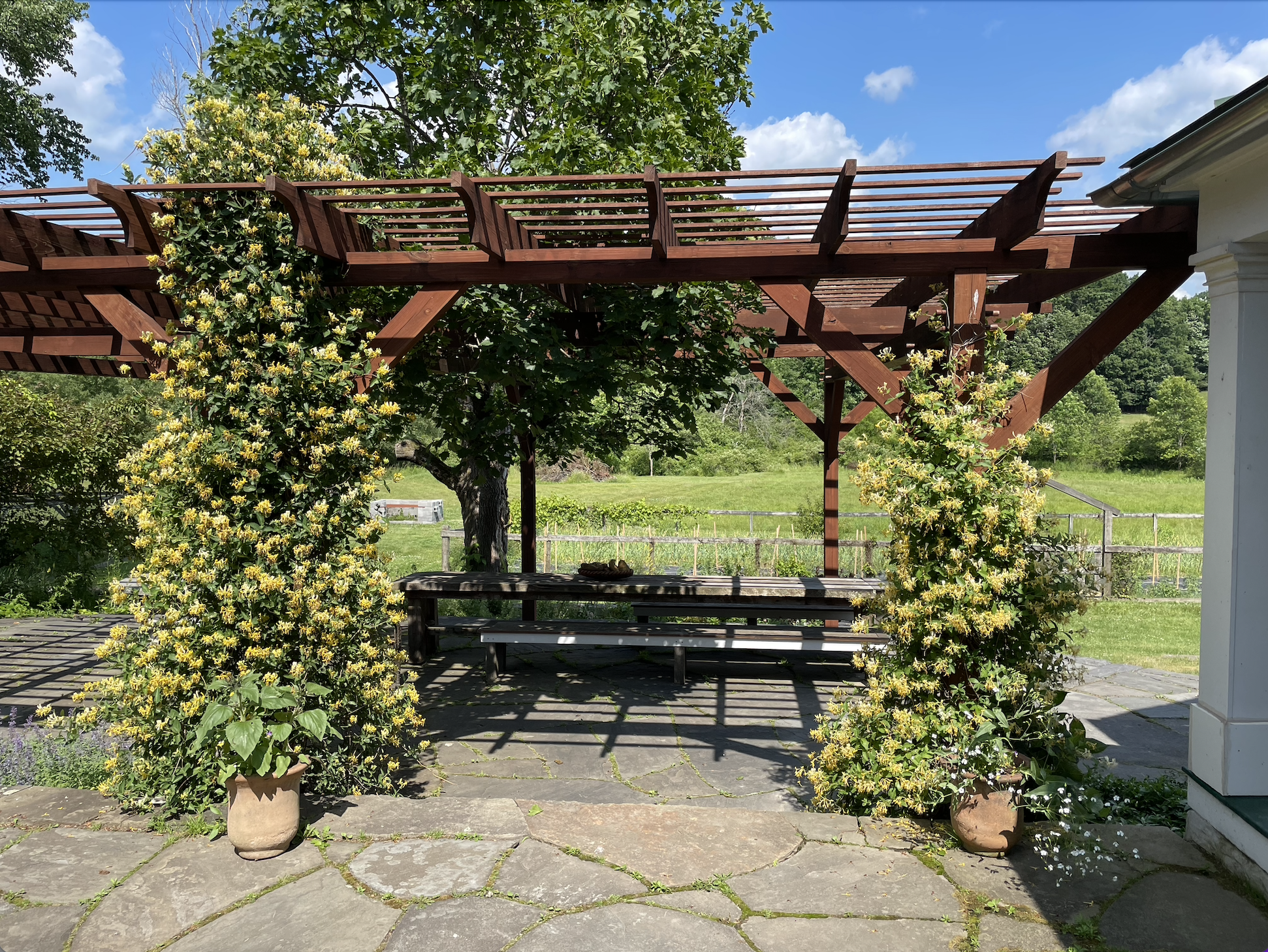
The setting for cocktails at the farm-to-table dinner.
Upcoming events:
Game night and movie. We hope to continue to build community with a game night in the cafe, and a movie night in the gallery barn in August. Please ask about either when you next visit the cafe and let us know if you are interested.
The sixth annual Farm-to-Table dinner on September 9th. This event is the highlight of our season. We open with champagne, premium wines, and a huge appetizer spread all served on the upper patio as the sun sets against the hillside. Once the sun has set, we all walk down past goats and chickens to the cafe that is lit up and set for our dinner. The evening ends with an aperitif as we light the bonfire. We would love to have you join us that evening. The event always sells out. Reserve your spot here.
Autumnal Dinner on October 13th. Reserve your spot here.
Please visit us and tell your friends.
Hope to see you soon,
Julie, Peter, Roby, and Matthew

May Newsletter
Since I last wrote, Spring has burst forth and all those bushes that for 50 weeks of the year you pass without notice open their white, purple and pink buds filling the air with spring sweetness.
Since I last wrote, Spring has burst forth and all those bushes that for 50 weeks of the year you pass without notice open their white, purple and pink buds filling the air with spring sweetness. There is a thrill to winter’s brown turning green and the synchronicity of the budding and blooming of the crabapple trees, then the lilacs, daffodils, rhododendrons, and daylilies, while we wait next for the conical flowers on the huge catalpas and peonies.
Spring is a wonderful time to be on a farm and look up. I have been paying particular attention to the industry of the legions of birds with whom we share this farm. All the holes that time and previous generations of birds have created in the various barns are perfect places to build a sheltering nest. Watching a finch make several attempts to squeeze through the tight hole with a crucial twig needed for the nest, I marvel at both the ingenuity and single-minded determination of these soon-to-be-mothers. The white droppings around the various holes make it easy to find the ideal places to watch this rite of spring.
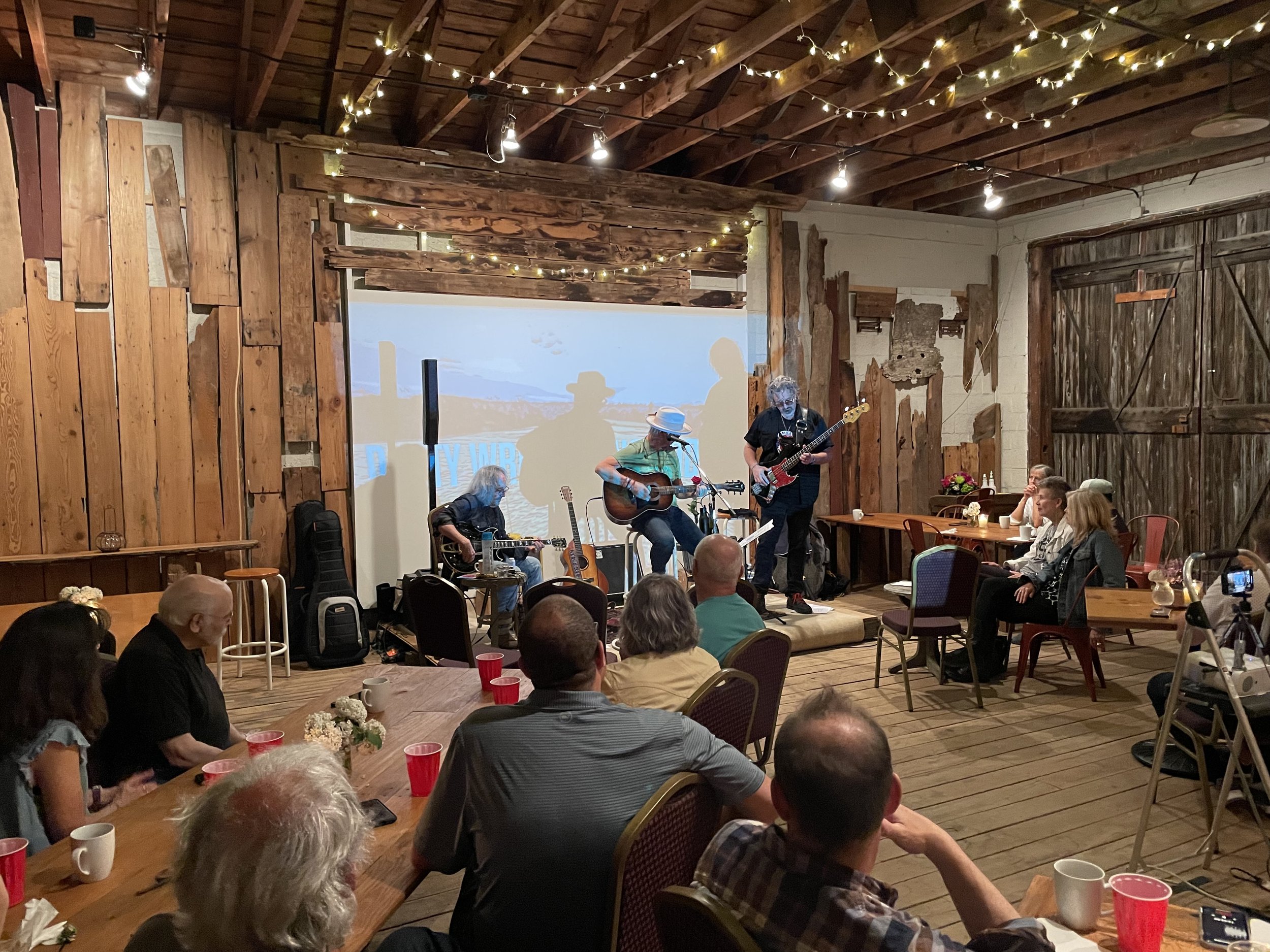
Dusty Wright and the Nomads perform at our first coffeehouse.
Waters of Fitting Creek wrap around the farm and are almost certainly the reason those original Dutch farmers settled here in the 1780’s. In April the creek pulsated with all the early spring rains, but levels have already dropped significantly and Peter is setting up irrigation, something that usually happens in summer. Between the lack of rain, last week’s killing freeze and an industrious family of groundhogs eating through the young kale, this spring has had its challenges. While we have pumps and a greenhouse to reduce some of our risk, our predecessors relied on the wisdom and techniques passed down from one generation to the next, but to survive, then as now, it is probably most important to have the equanimity to accept how much can’t be controlled–a real mind shift in a world where you can order anything your heart desires and have it the next day.

Quinn and Tracy Pennea teaching at the bread and pasta class.
The 2023 season’s early spring events–the foraged ramp dinner, bread and pasta cooking class, and the coffeehouse–all sold out and were great successes–pictures and reviews below. The success of our Mother’s Day brunch was quite literally overwhelming. With 42 separate orders placed in the first 30 minutes, our merry band of three struggled, and at certain points failed, to keep up with demand. By 1:00, we had gone through 15 dozen eggs and an almost equal number of loaves of bread, sold out of everything, and were pooped. With the kitchen opening for the season on tomorrow, we are adding staff, seeking new sources for some of the ingredients, and implementing a pause button requiring us to stop taking orders during periods when too many orders are in the queue. The “pause” idea being that when we are overwhelmed, we ask newly arriving guests to spend a bit of time down by the creek, walking around the farm watching the birds or visiting the goats while we work to catch up. (Nothing is more stressful for the chefs than to be working really hard and still have the number pending orders keep growing.) Thanks to all for your support and patience on Mother's Day!

“What a fantastic evening and a great start to the season! You guys really knocked it out of the park. The food was exceptional and the atmosphere everything that could be hoped for. Looking forward to the Summer Solstice Dinner--we will be 5.” ~ M.B.
“Saturday evening was wonderful. So much love and care went into the dinner and you could feel it. We had a great time.” ~ J.M.
“THANK YOU all! It was a super fun evening, and dinner was just extraordinary. Every bit. The lilacs too!” ~S. G.
“We loved it and signed up for the summer solstice party right away...” ~J.G.
“Thank you for a perfect evening! Delicious and fun. Grateful to you all for creating this warm, inviting space.” ~L.B
Upcoming events in June:
June 16th: Coffeehouse featuring the Wicker Creek Band–great music and desserts
June 23rd: Summer Solstice Dinner (with beer and wine options) limited number of seats left.
Visit our events page to sign up for these events and the others later in the summer.

April Newsletter
April 12, 2023

Peter's seed trays now fill the greenhouse and form a kind of map to our 2023 season. (The tender greens will be ready for our early May dinner and the cucumbers and beets will be on everyone’s plate at our Summer Solstice Dinner.) Each sunny day I step into the steamy greenhouse, the wonder of spring and new beginnings are there to celebrate. It has been 236 years since the original Dutch farmers first prepared these fields for spring planting. Like them, we count only on the soil, seeds and rain, and as it was in the 1780’s, the earth, in its infinite patience, is ready to play its part irrespective of the farmer’s plan.
In the gallery barn we are building a small stage, the base of which is an ancient piece of farm equipment, for our first coffeehouse in May with Dusty Wright. That stage will also be the setting for salons and other performances we have planned. Few things make me happier than repurposing beautiful, old pieces of wood and giving them new prominence. If you come to one of the May events, you will see the interior walls of the gallery barn form a crazy quilt made up of hundreds of gorgeous pieces of old wood getting a chance to shine again after generations of pure utility on floors, in rafters, or sifting grains.

Dusty Wright on the new Gallery Barn Stage
Two of our early spring events have sold out, the coffeehouse as well as cooking class and lunch, but there are still a few seats available at our season opening foraged ramp dinner on May 6th--see below for the menu. We have a new offering on our calendar: Relax and rejuvenate with a 90 minute energy medicine session with Elizabeth, May 20 & 21. If you have been meaning to sign up for any, or many, of our events, please do so now!! For the full calendar of events, and to secure your spots click here. We would love to see you early in the season.
And don’t forget if you want to breathe in that greenhouse oxygen and get your hands in the dirt, there are still plenty of spots on April 29th to volunteer a morning here at the farm. After a few hours of work, we will serve you lunch to say thank you. Also, we hope you are planning to bring Mom to our Mother’s Day brunch (no reservation required).

Foraged Ramp Dinner Menu
Roast chicken with ramp & white wine crème fraiche pan sauce
Spring Risotto with ramps, peas and asparagus
Salad of tender greens
Fresh baked baguette with ramp pesto and/or ramp compound butter
Rhubarb pound cake

Springtime: The opening of The Kitchen
The Kitchen at Ten Barn Farm opens on May 27.
Farmer in the Kitchen
The ramps line the creek's edge, sprouting seed trays fill the greenhouse, and two kids were born a few weeks ago--always three early signs of spring here. It has been 235 years since the tines first broke the field's winter crust at Ten Barn Farm. And while every spring is full of bloom and possibility, this spring is an additional beginning!!
After three years of planning, construction, and getting all the necessary permits, the Kitchen at Ten Barn Farm will open Memorial Day weekend. The current plan is for us to be open Friday, Saturday, and Sunday from 8 AM-2 PM for breakfast and lunch. There is nowhere you can go for a bite to eat where the food will have traveled a shorter distance to reach your plate. Fresh, fresh, fresh...
The beautiful new Kitchen at TBF is inside one of the oldest (and certainly the most beautiful) of our ten barns. The menu will be determined by what is coming out of the field as well as how well the hens are laying and the goats are producing milk for cheese or yogurt. The breads and muffins will be baked daily. The idea is you come up to the counter, order your meal, and then either take it away or eat in the cafe area, on the connected deck in the morning sun looking out over the fields, or at the table steps away on the bank of Fitting Creek.

The bakers and the chef
This is Julie's vision and a family affair. Julie and Peter (also the farmer) will be the chefs, I will be the maintenance staff, Matthew and his friends from Camphill Hudson will hopefully be helping us create jars of TBF pickles, salsa, jams, and other products, and Andrew will create the wine lists at our farm-to-table and fine wine dinners throughout the year. From time-to-time we will also be hosting game nights, a salon, movie night, or musical coffeehouse.
The Kitchen is a beautiful space, a place that will allow us to share with you both the bounty from our fields and this charming old farm.
The farm is located at 1142 County Route 22, Ghent, NY 12075--5 miles from Hudson or Chatham , and one mile from Art Omi. Please come visit, tell your friends and check the website or Instagram regularly for menu changes and special events.


The Fruits of Labor
Having been here on the farm for two months, I have started to settle in and take the time to think about things I rarely thought about before.
Sun golds ripening
Having been here on the farm for two months, I have started to settle in and take the time to think about things I rarely thought about before. Nothing captures this change more than enjoying the fruits of labor. The obvious example was Sunday’s harvest of sun gold tomatoes with Peter, Julie, and Matthew (who is home with us for August.) Seeing the ten tomatoes on a vine growing and ripening in succession with the ones closest to the stem turning gold first while the others down the line wait for their turn to absorb the nutrients and be ready for our pint containers. You want to pick them in an upward motion allowing the attached stem to stay connected to the harvested fruit, this increases their shelf life. Watching the crate fill up with pint and quart containers is very satisfying, as is munching on those sweet morsels, but I’ve been feeling equal satisfaction turning garden rows overtaken by invasive weeds in this ridiculously wet summer into a place where the things we want to be growing have the chance to do so. Mucking the chicken barn makes me weirdly happy—shoveling up the chicken shit and soiled hay, depositing it on the compost pile, then laying a fresh bale on the floor and in the laying boxes for these reliable producers of morning breakfast. The same is true of spending an hour pulling wild grapevines out of overtaken trees or bushes and finding a young maple more beautifully shaped than I expected. Then there are the ten barns, and the pleasure of bringing sufficient order to corners of barns still full of ancient pieces of wood and equipment. The previous farmers were resourceful, never throwing out anything that still had potential utility and like them I struggle with getting rid of any piece of wood that is hand hewn, has the patina of years or the authenticity of draft horse gnawing.

The tomato-pickers
You get the point, after a lifetime of working on projects that took one, two, even ten years, there is a newfound thrill seeing the fruit of my labor every single day. And the pleasure of being physically tired at the end of the day leading to a night of sound sleep, life rhythms have certainly changed. These simple pleasures got me thinking about a pastoral lit class I took in college where we read 20th century works like Annie Dillard’s Pilgrim at Tinker Creek, and Aldo Leopold’s A Sand County Almanac (books I am sure will come up in future blogs), but part of the course was devoted to the creation of the agrarian myth and the idea that the essence of virtue flowed from the self-sufficiency of working your own plot of land. This myth, which flowered in the later part of the 18th century just when our farm was first planted, was in many ways central to the formation of American society and its values. Thomas Jefferson wrote often about yeoman farmers, living independent lives on small family farms, calling them “the most precious part of the state.” “Cultivators of the earth are the most valuable citizens. They are the most vigorous, the most independent, the most virtuous, and they are tied to their country and wedded to its liberty and interests by the most lasting bonds.” –Thomas Jefferson to John Jay, 1785. (This whole set of ideas, of course, elides the reality that in many parts of the country the laborers that made farms prosperous were in bondage and hardly independent citizens.) And I started rereading another book from that course, Hector St. John de Creveceur’s Letters from an American Farmer, a very influential book in the late 1700’s where he praised America for having no history of feudalism, no monarch or aristocracy, a society centered on the ethics of the land and the people who worked it, calling America the “most perfect society now existing in the world.” Ben Franklin, hardly a man given to manual labor, wrote “the only honest way” for a nation to prosper is when “man receives a real increase of the seed thrown into the ground, a kind of continuous miracle….a reward for his innocent life and virtuous industry.”

The glories of Post and beam
Photo by Ivan Arreguin Toft
Having shaped some of the Constitutional debates and much discussed in elite circles, the agrarian myth became part of the popular psyche and political folklore in the early 19th century when it seemed there was nothing more compelling than having been raised on a farm, or in a log cabin. To this day political candidates tout their agrarian roots, real or imagined. This nationalist ideology made the farmer a symbol of the new nation and it got me wondering what the farmers who were turning this land into a farm in the late 18th century thought of these romanticized ideas. When I think of all they had to do in a day, a week, a year, it is hard to imagine they spent much time thinking about their role as national symbols, the yeoman farmer. Self-sufficiency was all they probably strove for given that there likely was not much of a local market for what they were growing in this sparsely populated region where a good portion of the people living here were doing the same thing. Even though they were only six miles from Hudson, and the Hudson River offered potential access from there to NYC, it is hard to imagine there were many roads through the forests in this newly settled area.
I bet there were many more people living in cities like NYC, Philly or D.C. thinking about the virtues of the yeoman farmer than the actual farmers who had a lot else on their mind. But I am sure that at the end of a day of plowing or harvesting or barn raising, those farmers had moments of pleasure looking out on the fruit of the day’s labor. They looked across these same fields, and while their labor was different than mine, I bet that we had the same feeling at the end of the day.


What is Organic (exactly)?
I have been thinking about how often I see the organic label on products from huge corporations.
Our fields full of organic veggies
I have been thinking about how often I see the organic label on products from huge corporations. Until recently, I thought “good for them, increasing corporate social responsibility is making our food healthier”, and I felt good that so many organic products are becoming available. But my view has been changing in recent months since leaving my work in NYC and moving up to the farm full-time where I can more closely observe the farm. Any organic farmer’s most fundamental concern is soil health. Peter cares for and feeds the soil which allows the biologically-active soil in turn to feed the plants that produce the nutritious food. Organic is so much more than not using chemicals to fertilize or suppress weeds and pests, it is about preserving biodiversity— healthy soil will not only produce delicious vegetables, but it also allows the soil to absorb the heavy rains as well as the carbon and much more. So are these big companies filling grocery shelves with certified organic produce really continually rebuilding their soil the way Peter does his?
The organic food market in the U.S. was $56.4 billion in 2020, up 12.8% over 2019, and yet there are not more organic farms. Obviously some big players have moved in, and so I started exploring what is happening. Over the past 25 years industry representatives, intent on expanding the definition of organic, have gained seats on all the USDA certifying boards which has unquestionably eroded the integrity of the USDA organic certification to the point where it is almost meaningless. The result: it is all but impossible for the consumer to know what they are getting when they buy organic. There are so many examples of this dilution of organic principles, like huge dairies certified organic where the cows have never been in a pasture, but the clearest example I have found is the organic certification of hydroponically grown fruits and vegetables.
Hydroponic farming is soil-less! These farms compact the ground until it is laser-level, and put down plastic tarps over the earth on which the trays or the containers sit. The nutrition that allows the plants to grow comes from liquid feed pumped into containers. This process is taking over the tomato, pepper, blueberry and other markets, but it is the opposite of the organic process to which Peter is devoted, the building up of biodiversity in the soil. Maybe these hydroponic farmers really do know what their plants need, but their produce shouldn’t be labeled organic, what does that even mean?! Call it hydroponic and let the consumers know what they are buying, rather than everything being called organic. Then the consumer can decide which process they think delivers the best flavor and nutrition, which is best for the planet, and which they can afford. How we grow our food is as important as what we eat.

Tin-lined seed storage room on the right
Before I get off this little soapbox, a word about the economic implications of the erosion of organic certification standards. Sticking with the hydroponic example, when I think of all the things Peter does for our fields with the composting/natural fertilizing, crop rotation, cover crops, letting fields rest, weeding and more weeding, battling bugs, groundhogs and deer, all so his vegetables can be nutritious, delicious and sustainable. The hydroponic workers deal with none of this and don’t fret about too much or too little rain, all the variables are controlled by the companies running these huge operations. And yet, those tomatoes sit in the same bin with real organic tomatoes driving the price for “organic” tomatoes down with their market power. It is exactly what happened 30-40 years ago in conventional farming when the huge agribusinesses moved in and drove so many smaller, family farms out of business. The additional insult this time around is that it was the small-scale organic farms that built up our understanding of the importance of organic processes and are now having their once meaningful label co-opted as some are being driven out of business. (Again, I am not saying hydroponics are bad, I’m just saying they are not organic.)
To the extent possible, know your food, I am lucky to know mine.
News: The first tomatoes have arrived. We are still picking raspberries and yesterday we turned Peter’s cukes into Ten Barn Farm pickles. We are worried about Billy, one of our three-month old goats, who is limping badly. Hard to watch him try to keep up with the other three young goats who are always tearing around.


Pickle time!

Come up to the farm-to-table dinner on September 11 for a great meal you can trust because the food was grown on the property and the farmers will be there. You will also get French wine and music, all in a beautiful setting with goats and chickens ready to greet you.
Click here to learn more or to purchase tickets

Buy Local
This farm was once much larger—probably up the long hillside, over Fitting Creek and passed the ridge.
The ridge over Fitting Creek
This farm was once much larger—probably up the long hillside, over Fitting Creek and passed the ridge. You certainly don’t need this many buildings for the ten acres we now own. Scale is key in farming. You need to either be big so you can maximize the value of all the equipment you need, or quite small to keep your overhead tightly in check. And then if you embrace organic and sustainable practices, that adds a complicating variable into the economic calculus because if you don’t use weed and pest eradication products, you are adding labor costs. Small scale organic farms produce marvelous, nutrient-rich food, but they are not the most reliable path to economic viability. Most small farms fail in the first five years.
Did you know that peas or tomatoes grown under the natural conditions here at Ten Barn Farm can be up to 4x’s as nutritious as the ones you buy at the grocery store? (And those tomatoes are likely harvested by workers not making a living wage and have traveled many more miles to reach your table.) Everyone makes their purchasing decisions based on resources as well as nutritional and sustainability concerns, but it is worth pausing when you have the chance to buy sustainability-grown peas at the farmers’ market that are 25% more expensive than the pre-packaged ones at the grocery store; that nutrient-rich food has added value in terms of your health and happiness. When you are there at the market with the farmer pondering what to buy, consider that you are talking to the person who grew the produce and that those vegetables were not produced on some mono-culture, industrial farm that often degrades the earth in so many ways. One way to think about it is you can pay now for healthier food and a healthier environment or pay later……

Peter in his normal pose among his veggies.
I know that for Peter, contributing to the health and well-being of our family, friends, and customers is the biggest motivation as he heads out for a day of weeding long rows, work that is more challenging than it might have been if he used weed and pest suppressants. So keeping the earth and the community healthy is part of the true job satisfaction for farmers, along with watching nature work and being your own boss. The other reason to use sustainable practices is so in 25 or 50 years these fields can still be producing for farmers not yet born. What do we, living on this historic farm, owe future generations? Did the farmers of the 18th, 19th or 20th centuries ponder that question? The beauty of the old family farm model is your interests and the interests of your great grandchildren are pretty perfectly aligned. You provide for your family today while preserving the integrity of the soil for future generations. But what happened to that last generation of farmers working this land fifty years ago? Did they think about their ecosystem differently knowing there was no one following in their footsteps? I would like to think they did not.
It has been a rough week for farmers in the Hudson Valley. Constant rain has most of our nicely headed-up cabbages in standing water needing to be harvested way too early or likely rot. Too bad we didn’t plant celery or rice, crops that can deal with fields of mud. It is not just farmers we need to consider when we think about climate change, but certainly farmers are living with the impact earlier and differently than those in non-agricultural industries. Farmers all over the world are dealing with climate change this season as they consider enhanced irrigation or dry farming in the west, new crop rotations across the growing season, and the inevitably of a growing number of damaging storms. A lot of challenges for modest pay, but the reward of sharing the taste of those first young peas in late May with customers or bringing the makings of the freshest possible dinner into your family kitchen each night is hard to put a price on.


The old draft horse stall

Knowledge Transfer
Life on the farm is about cycles of brown giving way to green and six months later green turning again to brown.
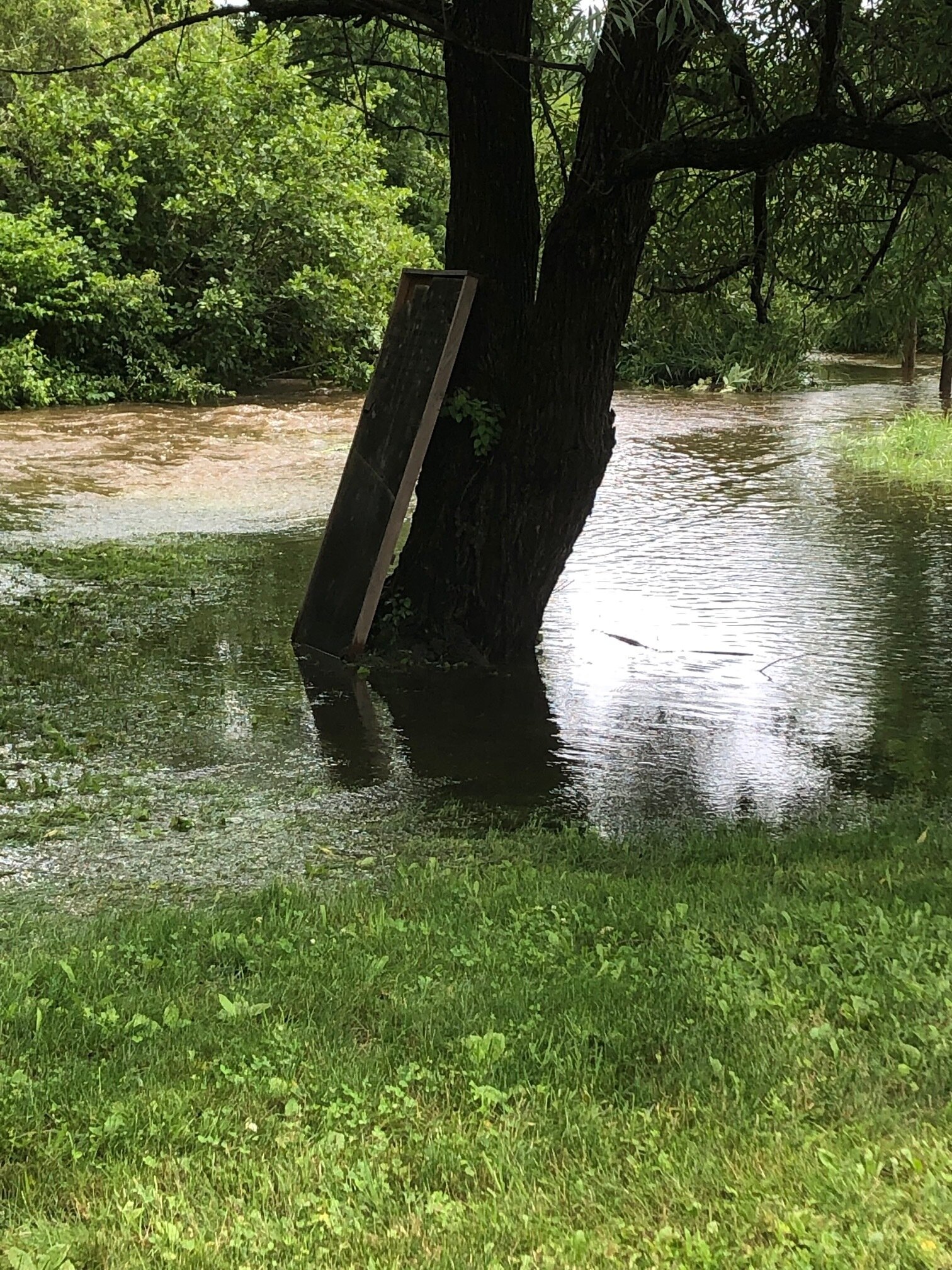
This week’s flooding
Life on the farm is about cycles of brown giving way to green and six months later green turning again to brown. Those transitions happen in glorious seasons as the trees bud out, the crocuses make their brief appearance, and the greenhouse fills with seed trays waiting for the all clear sign that the earth has warmed enough to welcome the sprouts. And then in the fall as the cold nights chip away all rows of crops, but for the hardiest of kale and winter squash, the maples turn a thrilling red before brown moves back in. In between, the summer’s heat and rain make magic. And have we had heat and rain this past couple of weeks. The normally bucolic Fitting Creek that passes through our property, and is our hedge against drought, turned into a river on Thursday filling half of our front field. Every farmer who has worked this land has faced climatic challenges, but the frequency of these events is surely on the rise.
The farmhouse was built in 1790 and you have to figure that first family arrived a few years before the house was completed. They probably built Clif’s barn first, so it has been 234 years since those first horse-drawn harrows broke the winter-packed earth and the farm was born. Of course, the earth had always been ready as it was this spring as Peter pulled the tractor into the field to start shaping the beds. The equipment is different, but the natural process is the same every year—the soil, seeds, sun and rain (as well as weeds and pests)—nothing can be rushed in this process. Crop planning is dictated both by each plant’s makeup and a farmer’s creativity. Today we will plant flowers for a fall wedding and harvest string beans, cucumbers, and pick raspberries. What was planted in 1787? They had no greenhouse, which shortened the growing season, and no weather reports. On what date did they decide to start direct seeding that first field? (Note: The first issue of The Farmers’ Almanac was published in 1793 and focused on meteorological information.)
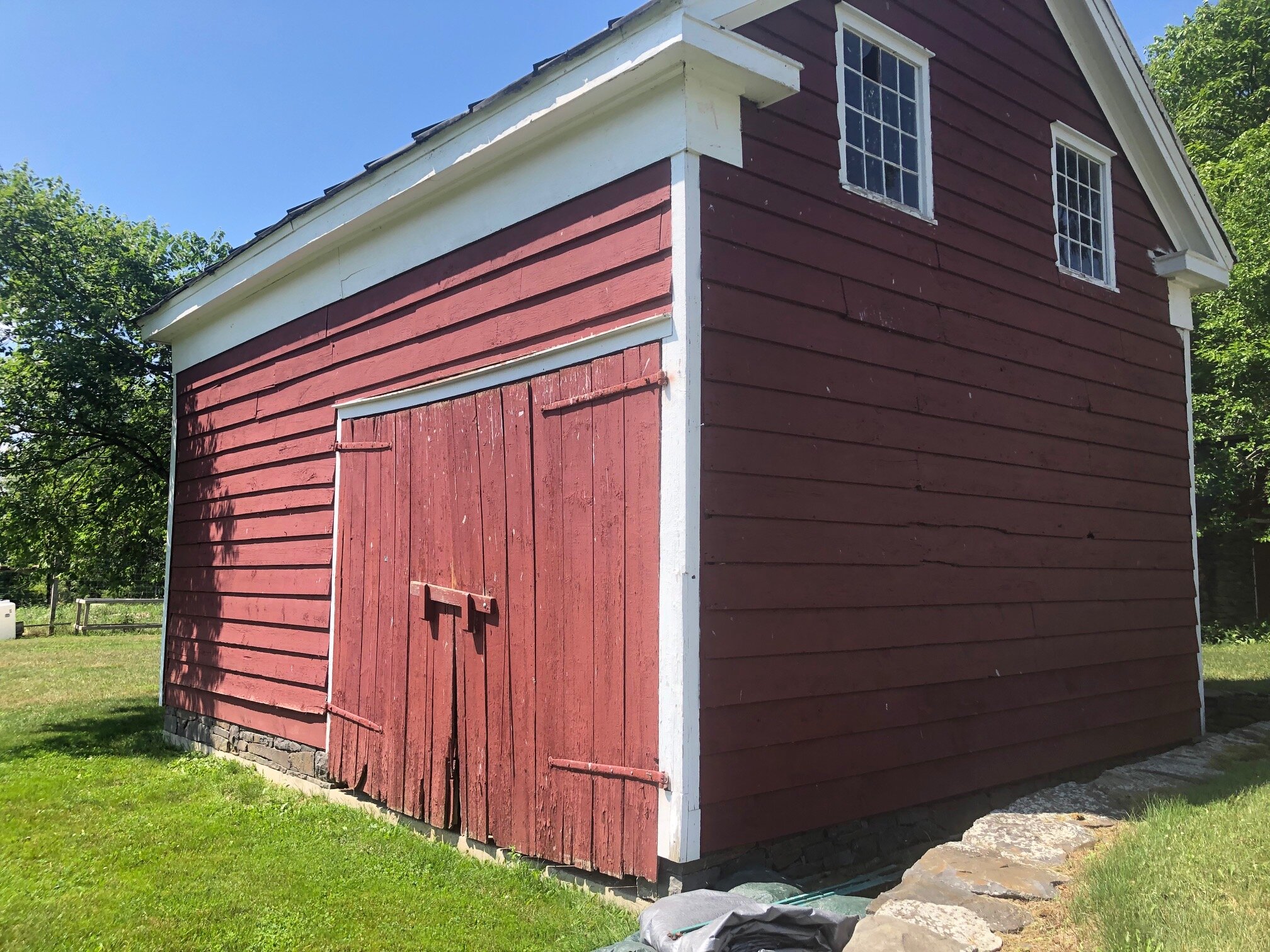
The first barn
Since those first fields were planted, generations of farmers learned from the land, the crops, and from that which invariably threatens, like drenching rains. Knowledge grew. Each spring the farmers headed out to their laboratory to build on what previous years taught; there was no procrastination—when the spring arrived it was time to start. And as time passed, each generation of farmers transferred their accumulated knowledge to the next, directly connecting the young with the wisdom of all their ancestors. Proven practices, perfectly situated barns, a line of trees, the handiwork of grandmothers and great, great-grandfathers helped the current generation jumpstart the springtime planting. No one was looking for a short term gain by exploiting or degrading the land that had supported, and would continue to support, the family. Instead they thought long-term, building for a return that would be fully realized by future generations. Row-by-row the garden (farm) grew.
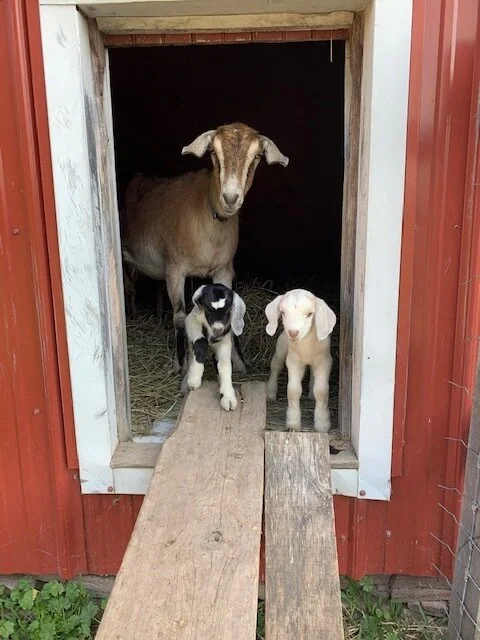
Walking the plank, Oreo and Marshmallow make their debut.
A generational transfer, a nearly preordained process, continued for over 150 years, binding families (while also stifling some.) The chain broke 50 years ago when the farm ceased to be a working farm. The beautiful barns emptied of crops and critters, the land ready each spring, but without a new generation all that wisdom had nowhere to transfer. Peter headed into the fields 8 years ago with better tools, but without someone who knew this land to guide him. His goal is to revitalize the earth and the farm. As I enter retirement anxious to work the fields and closely observe the natural processes, a modern-day knowledge transfer will begin as Peter guides me. We will see if there is any wisdom or skill growing out of my over 40 years of work experience that proves useful, I am sure Peter is doubtful. I probably have only 5-10 years where I can be at all useful, so Peter’s return on the investment of teaching me hardly seems worth it, but I am excited by the role reversal and the chance to learn from him and the land.


Welcome to Ten Barn Farm
This blog is going to report on the cycles of the season and the activities at Ten Barn Farm, as well as lessons learned from the fields, the many farm animals, and living surrounded by 230 years of farmers’ handiwork.

Moon, on the top tier, is Katrina's mother and both had two kids this spring. We live above the goats.
This blog is going to report on the cycles of the season and the activities at Ten Barn Farm, as well as lessons learned from the fields, the many farm animals, and living surrounded by 230 years of farmers’ handiwork. We will tell you what’s in season and what events are on the calendar as well as occasionally trying to channel the wisdom of the many generations who have worked this land before us.
When I look at the massive hand-hewn beams that were hoisted to build the biggest of the ten barns in the early part of the 19th century, it is inspiring to think of that family’s ambition building a barn that tall without the benefit of anything but horse and farmer-power. What were they thinking? In another barn they dug a well first, lined it with field stone and then built a barn on top of it for the draft horses. With the hay and the water both inside the barn, the care and feeding of the animals in winter became much easier for our predecessors. They had plans and dreams and so do we.
We bought this place in 2011 and have spent the last decade both farming the land and restoring the ten barns, turning some into multi-use spaces that we hope will make Ten Barn Farm a focal point for fresh food, lively conversation and the arts. The new Kitchen at Ten Barn Farm (inside that big old barn mentioned above) will allow us to create products from the beautiful produce coming out of the fields as well as hosting farm-to-table dinners, themed weekends, and it will be a cafe for breakfast and lunch several times a week. With the goat cheese, the chickens’ eggs, and the bakery, we hope there will be things happening year-round.
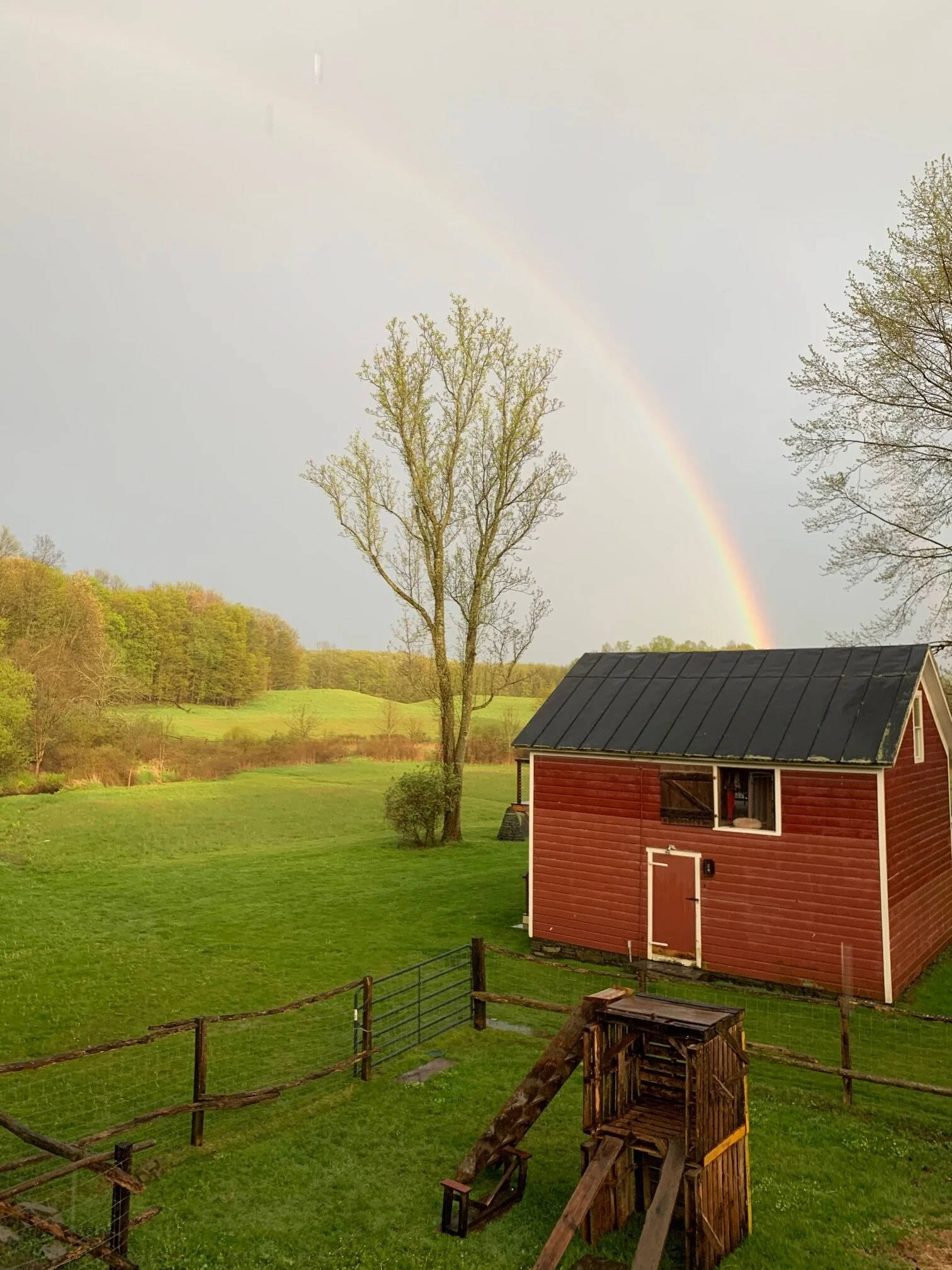
Rainbow over the chicken barn.
This blog will focus primarily on the present and what is happening on the farm, but we will also explore the past of this historic place and reflect on our responsibility to those who will follow. We certainly stand on the shoulders of the family who hoisted those huge beams to the heavens fastening them into place without any hardware. And with the increasing challenges of a changing climate balanced against a deepening understanding of sustainable farming practices, what we owe future generations who will be working this land one day is always in the back of our minds.
We will post once a week during the growing season and hope you will both enjoy what the land and the animals teach us, and be inspired to come to our events.
News: The Kitchen at Ten Barn Farm has been the film set for a twelve episode series, Cooking With Friends, put on by the Camphill Hudson Players and airing on cable stations around the country. Here is a link to the first six episodes. The official opening of our beautiful, new commercial kitchen (two years in the making) will be Saturday, September 11th when we put on our first farm-to-table dinner since 2019. This will be a French-themed evening—French food, wine and live music. To learn more and/or sign-up click here.
Until next week,
Roby Harrington

Mid 19th century smokehouse sits next to the three-seater outhouse. (We do now have indoor plumbing.)